Cisco Firepower 1010 for Small Sites
When a branch office, retail site, or small remote facility needs more than a basic security appliance, the Cisco Firepower 1010 usually enters the conversation fast. It sits in a practical segment of the market – compact enough for small locations, but still built around enterprise firewall policy, VPN, and traffic inspection requirements that low-end devices often fail to handle well.
For buyers evaluating hardware for distributed environments, the real question is not whether the Cisco Firepower 1010 is popular. It is whether the platform fits the traffic profile, management model, and lifecycle plan of the site you are securing. That distinction matters because this model works very well in the right role, and less well when it is expected to behave like a larger data center firewall.
Where the Cisco Firepower 1010 fits
The Cisco Firepower 1010 is positioned for small branch deployments, retail environments, remote offices, and smaller business sites that need enterprise-class firewalling without stepping into a larger rack-mounted platform. It is compact, straightforward to place, and aligned with organizations that need secure WAN edge connectivity, site-to-site VPN, remote access VPN, and policy-based traffic control in a limited footprint.
This makes it relevant for businesses standardizing on Cisco infrastructure across multiple locations. If the wider network already includes Cisco routing, switching, wireless, or centralized security management, the 1010 can fit neatly into that operational model. Procurement teams also tend to favor it when they need consistency across branches rather than introducing a separate vendor stack for smaller sites.
That said, fit depends on the site. A quiet branch with moderate internet usage, cloud application access, and VPN backhaul is very different from a location pushing heavy east-west traffic, advanced inspection across large encrypted flows, or dense user counts with aggressive application control. The platform can cover a lot, but it still belongs in the compact firewall class.
What buyers typically expect from this platform
For most technical buyers, the Cisco Firepower 1010 is not being assessed as a generic firewall. It is usually being evaluated as part of a broader infrastructure decision. The expectation is that it should provide reliable perimeter security, practical throughput for small locations, support for security policies beyond basic ACLs, and compatibility with an enterprise operations model.
Those expectations are reasonable. This model is commonly considered when teams need stateful firewalling, intrusion prevention capabilities, URL and application visibility depending on licensing and software deployment, and VPN services for branch connectivity. It also appeals to organizations that want to avoid overbuying for smaller offices while still keeping a path into Cisco security tooling.
The trade-off is that buyers must separate hardware capability from licensed feature scope. With Cisco security platforms, performance discussions only make sense when tied to the actual services being enabled. Raw firewall throughput is one thing. Real-world throughput with deeper inspection, VPN, and policy enforcement is another.
Cisco Firepower 1010 hardware considerations
At the hardware level, the Cisco Firepower 1010 is attractive because it gives small sites a purpose-built appliance rather than forcing a repurposed routing platform into a firewall role. For many organizations, that matters operationally. A dedicated firewall at the edge simplifies policy design, segmentation decisions, and support workflows.
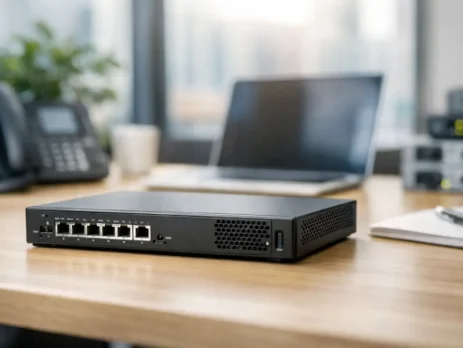
Its compact design is useful in branches where rack space is limited or where equipment may be installed in a small wall cabinet, back office, or telecom enclosure. That practical deployment detail is often overlooked during specification review, but it matters in retail chains, clinics, satellite offices, and service counters where space, power, and heat are all constrained.
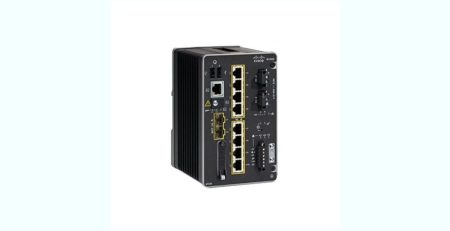
Port layout and interface planning should be reviewed carefully before purchase. Small appliances can create false confidence because they look simple, yet interface requirements change quickly once WAN handoff, LAN segmentation, management access, failover planning, and any DMZ-style separation are factored in. Buyers should validate the exact network design rather than assuming the box will adapt later without compromise.
Software, licensing, and management model
A Cisco firewall decision is never just a hardware decision, and that is especially true here. The Cisco Firepower 1010 can be part of different management approaches depending on software version, security policy requirements, and operational preference. For procurement teams, this affects not only cost but also support burden and deployment time.
Some organizations prioritize local simplicity for standalone branch use. Others want centralized visibility and policy control across many sites. If the environment already uses Cisco security management tools, adding a 1010 can make sense as an extension of that model. If not, teams should be realistic about whether they want the overhead of introducing a new management framework for a small number of devices.
Licensing deserves close attention. Security services, advanced inspection, and support entitlements can materially change the total cost of ownership. A lower hardware price does not automatically mean a lower project cost if the required subscriptions, feature sets, and support contracts are not scoped correctly at the start.
Best use cases for Cisco Firepower 1010
The strongest use case for the Cisco Firepower 1010 is the distributed enterprise that needs a standardized security appliance for branch and edge locations. In that scenario, the platform can provide enough security control to protect the site while remaining small enough to deploy widely.
It is also a practical option for managed service providers supporting smaller customer locations that still require recognizable enterprise hardware. Standardization helps with sparing, replacement planning, and operational familiarity across many installations.
For businesses opening new satellite sites, the 1010 often works well where there is a need for secure internet access, VPN connectivity back to headquarters or cloud environments, and policy enforcement for a modest user population. It also fits refresh projects where older small-office firewalls need replacement with a platform that aligns better with current security expectations.
Where it may be less ideal is in environments with high inspection demand, rapidly growing branch bandwidth, or a roadmap that includes heavy secure access, aggressive east-west segmentation, or broad encrypted traffic analysis at scale. In those cases, moving up the product range may be the better long-term decision, even if the 1010 appears cost-effective at first glance.
Buying decisions that matter more than the model number
A common mistake is treating the Cisco Firepower 1010 as a simple part-number purchase. For enterprise buyers, the better approach is to evaluate it in context: intended software image, required licenses, support coverage, deployment topology, and replacement planning.
This is where sourcing becomes important. Hardware availability, exact SKU matching, accessory compatibility, power requirements, and support for expansion or migration scenarios can all affect whether the purchase is smooth or disruptive. For organizations managing multiple branches or maintaining spare stock, it is often more efficient to work with a supplier that understands the underlying Cisco hardware categories rather than treating every firewall order as a one-off transaction.
It is also worth planning around lifecycle and support windows. Even when a device is technically suitable, buyers should confirm that its supportability aligns with the expected service life of the site. A short-term branch project and a five-year infrastructure standard are not the same procurement decision.
Cisco Firepower 1010 vs. overbuying or underbuying
The value of the Cisco Firepower 1010 is that it helps avoid both extremes. It is not a stripped-down consumer-grade device, and it is not a large enterprise firewall pretending to be branch-friendly. In many cases, that balance is exactly what makes it commercially sensible.
Underbuying creates obvious problems – constrained performance, weak inspection capability, and early replacement. Overbuying is less dramatic but still expensive. Larger appliances bring higher acquisition cost, greater power and space demands, and unnecessary complexity for smaller sites. The 1010 makes sense when the goal is to match security capability to branch reality rather than speculating on oversized future demand.
Still, there is no universal answer. If the branch is expected to stay small and function primarily as a secure access point, this model can be a strong fit. If the location is on track to become a regional hub with growing traffic and layered security demands, buyers should assess the next step up before standardizing.
Procurement and replacement planning
For organizations buying at scale, firewall selection is only half the job. The other half is ensuring repeatable supply, configuration consistency, and fast replacement options when a site fails or expands. That is where experienced infrastructure sourcing adds value.
A supplier focused on enterprise networking hardware can help validate model alignment, identify exact product variants, and support multi-site purchasing with fewer errors. For businesses sourcing in the UAE or managing regional rollouts through Dubai, access to technical sales support and dependable fulfillment can reduce deployment delays, especially when matching firewalls with related Cisco switching, wireless, and power components.
The Cisco Firepower 1010 remains a practical firewall for small branches because it solves a specific problem well: delivering enterprise-class security in a compact form factor for sites that do not need a larger platform. If your requirement is precise, your licensing is scoped correctly, and your growth assumptions are realistic, it is often the right kind of hardware purchase – not the biggest, just the one that fits.