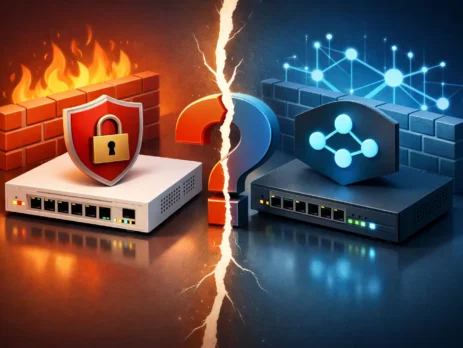
Fortinet vs Cisco Firewall: Which Fits Best?
A firewall decision usually looks simple until the shortlist reaches procurement. Then the real questions show up: Which platform fits the existing network stack, which one adds operational overhead, and which one stays cost-effective after subscriptions, support, and refresh cycles are included? That is where the fortinet vs cisco firewall comparison matters most.
For most business buyers, this is not a brand popularity contest. It is a platform choice that affects security policy management, remote access, branch standardization, throughput planning, and hardware sourcing for years. Fortinet and Cisco both serve enterprise environments well, but they do not deliver the same operational experience or buying model.
Fortinet vs Cisco firewall at a glance
Fortinet is often selected for buyers who want strong security feature density in a single appliance, competitive price-to-performance, and straightforward fit for distributed branch deployments. Cisco is often preferred where the network is already Cisco-heavy, where policy integration with the broader Cisco security portfolio matters, or where internal teams are standardized on Cisco tooling and support processes.
That quick answer is useful, but incomplete. The better choice depends on how your team buys, deploys, and manages infrastructure.
Where Fortinet usually stands out
Fortinet has built much of its firewall reputation around consolidation. In many deployments, buyers look at FortiGate because it combines firewalling, SD-WAN, VPN, application control, web filtering, and intrusion prevention in a package that is comparatively efficient for its price class.
That matters for branch networks and midmarket environments where one appliance may need to carry multiple roles. If the objective is to standardize branch security across many sites without overcomplicating hardware selection, Fortinet often presents a clean path. Performance numbers are typically attractive relative to cost, especially when compared against platforms that require additional licensing layers to enable comparable security services.
Management is another reason Fortinet is frequently shortlisted. Teams that are already familiar with FortiOS often appreciate the consistency across appliance families. The platform can scale from smaller branch deployments to larger data center or campus edge use cases without forcing a complete change in operating model.
That said, Fortinet is not automatically the lower-friction choice in every environment. Security effectiveness still depends on proper policy design, firmware discipline, and realistic sizing. A lower-cost appliance that is undersized for inspection workloads will become expensive quickly if it has to be replaced early.
Where Cisco usually stands out
Cisco’s firewall value is strongest when viewed as part of a broader infrastructure estate. If an organization already runs Cisco switching, routing, identity controls, secure access tooling, or centralized management platforms, a Cisco firewall can fit naturally into that operational framework.
For larger enterprises, that alignment can outweigh a pure appliance price comparison. Procurement teams may prefer a vendor strategy with fewer exceptions. Engineering teams may value integration with existing Cisco support contracts, account structure, and deployment standards. In heavily standardized environments, those factors matter as much as raw throughput.
Cisco also tends to appeal to organizations with internal teams that already know Cisco policy models, interface logic, and lifecycle management. Familiarity reduces deployment risk. That is especially relevant in regulated environments or complex enterprise networks where change windows are narrow and rollback planning is strict.
The trade-off is that Cisco can feel heavier from a licensing and portfolio perspective. Depending on the model and software stack, buyers may need to look more carefully at entitlement structure, management options, and feature packaging before they have a true total cost figure.
Performance is not just throughput
In a fortinet vs cisco firewall evaluation, quoted firewall throughput is only a starting point. The more relevant question is what happens when security services are enabled. Threat inspection, SSL inspection, application awareness, and VPN loads all change the real performance profile.
Fortinet often gets attention for strong performance efficiency with security services enabled, particularly in branch and midrange appliance categories. Cisco can perform very well too, but buyers need to validate model-specific numbers against actual use cases rather than relying on base firewall metrics.
This is where many projects go off track. A firewall sized for simple stateful inspection may struggle once deep inspection and remote access demand increase. For procurement teams, the practical move is to match expected traffic mix, encrypted traffic volume, user counts, site role, and growth window to the appliance class. The platform decision only works if the model selection is right.
Management and operations
Operations often decide whether a firewall platform feels like a good investment after the first six months. Day-two management matters more than datasheet marketing.
Fortinet is commonly seen as efficient for teams that want a unified feature set with relatively direct administration. It is well suited to organizations managing many branches with repeatable policy patterns. For MSPs and integrators, that consistency can reduce deployment time across customer estates.
Cisco has strengths in organizations that already operate within Cisco management practices and security architecture. If your team uses Cisco across routing, switching, wireless, and security, keeping the firewall inside that ecosystem may simplify operational governance. The advantage is less about the box itself and more about standardization.
The trade-off is that the better management experience is not universal. A team with strong Fortinet experience may find Fortinet faster to operate. A team with deep Cisco expertise may reach the opposite conclusion. Skills inventory inside your organization is part of the buying decision, not a side note.
Licensing, support, and total cost
This is usually the section that changes the shortlist.
Fortinet is often viewed as favorable on price-to-performance, but buyers still need to examine bundle structure, support term, security subscriptions, and renewal impact. A lower upfront number can become less attractive if the chosen package does not align with the actual inspection or compliance requirements.
Cisco requires the same scrutiny, sometimes more. Depending on the environment, Cisco’s value can be strong when enterprise agreements, support relationships, or wider Cisco purchasing commitments are already in place. In other cases, the cost stack may be harder to justify against Fortinet for branch-heavy rollouts.
The right comparison is never appliance price alone. It should include hardware, licensing, support, deployment effort, management tooling, training impact, and refresh planning. For buyers managing replacements across multiple regions or maintaining spare inventory, availability and sourcing continuity also deserve a place in the analysis.
Best fit by deployment type
Branch and distributed sites
Fortinet is often a strong fit for branch standardization. The combination of security features, SD-WAN capability, and competitive appliance economics makes it attractive when many sites need similar profiles. For retailers, logistics networks, schools, and multi-site enterprises, that can be a decisive advantage.
Cisco is still a valid branch option, especially for organizations already committed to Cisco end to end. If the branch architecture depends on Cisco-centric operational standards, the standardization benefit may outweigh any price premium.
Enterprise core and complex environments
Cisco can be compelling in large enterprise environments where integration, internal skill alignment, and vendor consolidation carry significant weight. Security teams that want tight alignment with broader Cisco architecture may prefer to stay within that ecosystem.
Fortinet remains highly competitive here, particularly where buyers want strong inspection capability and clear value across appliance tiers. It is not only a branch platform. The main question is whether the organization prioritizes ecosystem alignment or standalone platform economics.
MSP and integrator use cases
Fortinet often works well for service providers and integrators that need repeatable deployment models and efficient multi-site administration. Cisco can be equally attractive for clients with existing Cisco estates or procurement mandates. In practice, many MSPs support both because customer environments are rarely uniform.
How to decide between Fortinet and Cisco firewall platforms
The fastest way to make a sound decision is to anchor the comparison to operational reality. Start with the existing network stack. If your switching, routing, identity, and support model are already centered on Cisco, a Cisco firewall may reduce friction even if the appliance cost is higher.
Then look at deployment scale. If you are rolling out security across many branches and need strong feature coverage without pushing budget too far, Fortinet often deserves serious attention. After that, validate performance under real inspection conditions, not theoretical maximums.
Finally, check procurement practicality. Exact model availability, renewal timing, spare strategy, and support coverage can influence the buying outcome as much as feature comparisons. For organizations sourcing current and legacy infrastructure at scale, that step is not administrative detail – it is risk control.
The best firewall is rarely the one with the strongest marketing position. It is the one your team can size correctly, source reliably, support consistently, and keep aligned with the rest of the network as the environment changes.

I am an enthusiastic tech blogger with 15 years of experience in the technology field. I am passionate about sharing valuable insights and helping people who are interested in technology gain useful and practical information. I am originally from Mumbai, India.