Cisco C9115AXI for Enterprise Wi-Fi
When wireless complaints start sounding familiar – slow roaming, dropped calls, crowded conference rooms, and client density that keeps climbing – the access point choice matters more than the controller dashboard. The Cisco C9115AXI sits in that practical middle ground many enterprise buyers are looking for: Wi-Fi 6 capability, Cisco-managed visibility, and a form factor suited to standard indoor deployments without moving into overbuilt territory.
For IT teams planning refresh cycles, branch rollouts, or expansion in office, education, healthcare, and mixed enterprise spaces, this model is often evaluated because it balances current wireless standards with predictable Cisco architecture. It is not the highest-end access point in the portfolio, and that is exactly why it fits so many projects.
Where the Cisco C9115AXI fits
The Cisco C9115AXI is part of Cisco’s Catalyst 9100 wireless family, designed for organizations moving from 802.11ac to 802.11ax, now widely recognized as Wi-Fi 6. In practical terms, that means improved efficiency in environments where many users and devices are competing for airtime at the same time.
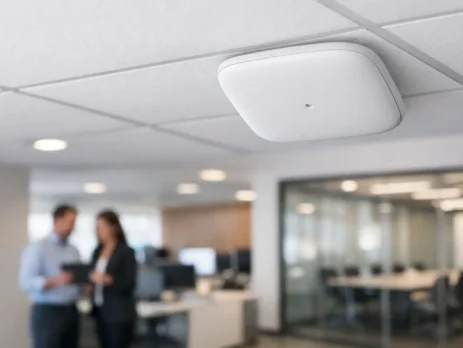
This is an indoor access point intended for enterprise-grade deployments rather than small office retail scenarios. It suits standard office floors, meeting rooms, classrooms, clinics, and distributed business locations where centralized policy, security, and lifecycle support matter. Buyers considering this model are usually not just comparing radio specs. They are also looking at controller compatibility, licensing structure, power requirements, mounting conditions, and whether the device aligns with the rest of the Cisco environment already in place.
That broader fit is often what determines whether the C9115AXI is the right purchase. If the network already relies on Cisco switching, wireless management, and identity policy, keeping the wireless layer in the same ecosystem can simplify operations over time.
Cisco C9115AXI specifications that matter in purchasing
On paper, Wi-Fi access points can look similar. In deployment, the differences show up quickly. The Cisco C9115AXI is a dual-band 802.11ax indoor AP with integrated antennas, making it a straightforward option for standard ceiling or wall-mounted enterprise coverage.
For procurement and design teams, the relevant points are less about marketing labels and more about deployment assumptions. This model supports modern Wi-Fi 6 features that improve client handling in dense environments, including better spectrum efficiency and improved performance when multiple devices are active simultaneously. That matters in organizations where laptops, phones, tablets, collaboration devices, printers, scanners, and IoT endpoints all share the same wireless infrastructure.
Integrated antennas are another practical factor. The C9115AXI is easier to standardize across common indoor spaces where external antenna design is not required. If a site has unusual RF conditions, long corridors, high ceilings, or specialized coverage patterns, a different model with external antenna options may be the better fit. For typical enterprise floors, though, integrated antennas reduce complexity and help speed deployment.
Power is also part of the buying discussion. As with many enterprise Wi-Fi 6 access points, switch PoE capacity and feature operation should be reviewed together. Organizations refreshing APs without refreshing switching sometimes discover that older switching infrastructure can power the device, but not always at the optimal feature set. That does not automatically rule out the C9115AXI, but it means the wireless refresh should be assessed alongside access switching capacity.
Performance expectations in real business environments
The Cisco C9115AXI is best understood as a mainstream enterprise Wi-Fi 6 access point, not a specialty high-density stadium unit and not an entry-level small business AP. That distinction matters because it keeps expectations aligned with actual deployment goals.
In a typical corporate office, this model is well suited for consistent coverage, voice and video collaboration, roaming users, and mixed client generations. Even where many users still connect with older devices, a Wi-Fi 6 access point can still improve efficiency because airtime handling becomes more disciplined across the environment.
That said, performance is never just about the access point. Channel planning, AP density, building materials, switch uplinks, controller configuration, and client behavior all influence results. A C9115AXI deployed correctly in a moderate-density office can outperform a more expensive model deployed poorly. Buyers who focus only on max data rates usually miss that point.
For conference-heavy spaces, shared offices, and education-style layouts, this model generally provides the right blend of capacity and manageability. For extremely dense user concentrations or highly specialized RF environments, other Catalyst models may be more appropriate. The right answer depends on the number of concurrent users, application profile, and coverage design, not just on whether the AP supports Wi-Fi 6.
Deployment and management considerations
One reason the Cisco C9115AXI remains a relevant purchasing target is deployment flexibility within Cisco wireless environments. Enterprises may use on-premises controllers, cloud-managed workflows, or architecture tied to broader Cisco operational tooling. For organizations already invested in Cisco infrastructure, that consistency can reduce training overhead and simplify support processes.
Management considerations should be addressed before ordering. Technical buyers typically need to confirm software support, controller compatibility, subscription or licensing requirements where applicable, and region-specific deployment constraints. This is especially important in larger rollouts where a hardware mismatch can delay installation across multiple sites.
There is also the issue of lifecycle planning. Many businesses are not buying a single AP. They are procuring a repeatable wireless standard for branch offices, campuses, or managed customer environments. In those cases, the C9115AXI is attractive because it offers a recognizable enterprise baseline without forcing every site into a premium-tier access point.
Install teams also tend to value predictability. Indoor integrated-antenna APs are easier to standardize in documentation, sparing, and installation workflows. If the project requires fast deployment across many rooms or multiple offices, that simplicity has real operational value.
When the Cisco C9115AXI is the right choice
The Cisco C9115AXI makes sense when the requirement is clear: enterprise indoor wireless, Cisco compatibility, Wi-Fi 6 performance, and dependable support for business applications. It is a strong fit for organizations upgrading from older Aironet or first-generation 802.11ac deployments and looking for a practical path into newer wireless standards.
It is also a sensible option for procurement teams that want model consistency across standard indoor spaces. In many projects, not every location needs the most advanced AP in the catalog. Using a right-sized model where coverage and user density are predictable can control budget without stepping down to non-enterprise hardware.
Managed service providers and system integrators often evaluate models this way. They are not just purchasing for one technical specification sheet. They are purchasing for repeatability, supportability, and compatibility across many customer environments.
When another model may be better
There are trade-offs. If the site requires external antennas for directional coverage or difficult building geometry, the C9115AXI may not be the ideal fit. If the environment is unusually dense, such as large event spaces or very high-capacity user clusters, a higher-tier model may offer better long-term results.
There is also the budget question. For some small sites, Cisco enterprise wireless may exceed what the environment truly requires. For others, especially those with compliance, segmentation, roaming, and centralized policy needs, the Cisco premium is justified because the operational model matters as much as the radio.
This is where experienced sourcing support becomes useful. Part-number accuracy, hardware condition, lead time, and compatibility validation can affect the project just as much as the AP selection itself. A technically focused supplier can help buyers confirm they are purchasing the correct Cisco C9115AXI variant for the intended deployment rather than simply matching a model family name.
Sourcing the Cisco C9115AXI with fewer delays
For procurement teams, the risk is rarely just choosing the wrong product. It is choosing the right product too slowly, receiving incomplete information, or discovering after delivery that supporting components were overlooked. Wireless projects often involve mounting accessories, power planning, controller readiness, and software alignment, all of which should be checked before rollout dates are committed.
That is why model-specific sourcing matters. Businesses buying Cisco wireless hardware typically need exact identification, fast response on availability, and a supplier that understands broader network dependencies. For companies managing regional or international infrastructure procurement, including organizations buying through the UAE and Dubai for wider project delivery, that sourcing reliability can remove significant deployment friction.
The Cisco C9115AXI remains a practical enterprise Wi-Fi 6 option because it addresses the reality of most business wireless networks: they need solid performance, manageable complexity, and compatibility with established Cisco environments. If your objective is a dependable indoor AP for professional deployments rather than a spec-sheet outlier, this model deserves a close look – especially when the purchase decision is tied to the full network, not just the access point.