Fortinet Firewalls for Enterprise Networks
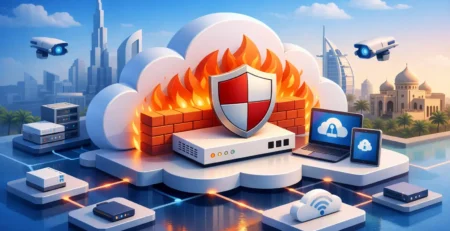
A firewall replacement usually starts the same way – rising east-west traffic, more remote access, inconsistent policy enforcement, or hardware that no longer fits current throughput and inspection demands. That is where fortinet firewalls enter the conversation for many enterprise teams. They are often evaluated not just as perimeter security devices, but as part of a broader architecture that combines security inspection, segmentation, SD-WAN, and centralized policy control.
For procurement teams, network administrators, and integrators, the real question is not whether Fortinet is a known vendor. It is whether a given FortiGate platform aligns with the site profile, interface density, licensing model, and operational design already in place. That decision depends on traffic mix, deployment scale, and how much of the wider Fortinet ecosystem the organization plans to adopt.
Where fortinet firewalls fit in the network
Fortinet firewalls are commonly deployed at the internet edge, between WAN and LAN segments, at branch offices, in campus environments, and inside data centers. In smaller environments, a single appliance may cover routing, firewalling, VPN, web filtering, and SD-WAN. In larger environments, the role is more specific, with dedicated devices handling segmentation, inter-VLAN security, data center east-west inspection, or high-availability perimeter control.
This flexibility is one reason Fortinet remains a frequent shortlist option. A branch office with modest bandwidth needs and a few uplinks has different requirements from a multi-site enterprise aggregating encrypted traffic, SaaS access, internal application flows, and site-to-site tunnels. The product family spans those scenarios, but model selection matters because the gap between entry-level and high-capacity platforms is significant in interfaces, concurrent sessions, SSL inspection capability, and expansion options.
What buyers should evaluate before choosing fortinet firewalls
Throughput figures are usually the first point of comparison, but headline numbers rarely tell the whole story. Raw firewall throughput can look strong on paper while real-world performance drops once SSL inspection, IPS, application control, and logging are enabled together. For technical buyers, the better approach is to map expected production policies against inspected traffic volume rather than relying on maximum numbers from a datasheet.
Interface requirements deserve the same scrutiny. Some deployments need basic copper connectivity and a few WAN links. Others need 10G or higher interfaces, HA ports, dedicated management, or enough physical density to avoid adding switching complexity around the firewall. If segmentation is part of the design, the interface plan should account for growth instead of only current VLAN count.
VPN capacity is another practical factor. Organizations with hybrid workforces, partner connectivity, or branch interconnects should look beyond simple IPsec support and consider tunnel scale, remote access user volume, authentication integration, and how policy management will be handled over time. A platform that works well as a branch firewall may not be the right fit as a central concentrator.
Licensing also affects total cost and operational fit. Some buyers only need core firewall and VPN functionality. Others expect advanced threat protection, web filtering, sandbox integration, endpoint visibility, or centralized analytics. The right package depends on the organization’s security stack and whether the goal is consolidation or targeted deployment. Paying for features that will never be enabled is inefficient, but underbuying security subscriptions can leave the hardware underutilized.
Performance and security trade-offs
Fortinet is often selected because it offers a strong balance of security features and appliance performance across many tiers. That said, every firewall platform involves trade-offs. Deep inspection improves visibility and control, but it also raises processing demands, certificate management complexity, and administrative overhead. If the environment includes a large volume of encrypted application traffic, SSL inspection planning should happen early, not after deployment.
There is also the question of consolidation. A single platform that handles firewalling, SD-WAN, VPN, and content security can simplify branch architecture and reduce device count. On the other hand, some enterprises prefer separation of duties across network and security functions, especially in environments with strict operational boundaries or existing investments in third-party monitoring and policy tooling. Fortinet supports consolidated deployments well, but consolidation is only beneficial if it matches the team structure and support model.
High availability should be treated as a design requirement, not a later add-on. If downtime tolerance is low, buyers should evaluate HA pair design, failover behavior, session synchronization, power requirements, and maintenance windows. A lower-cost single appliance can appear attractive at purchase time, yet create avoidable risk in production.
Operational considerations after deployment
The best firewall platform is not only the one that inspects traffic effectively. It is the one the team can manage consistently over years of policy changes, software updates, and network expansion. Fortinet environments benefit from disciplined configuration standards, role-based access, backup procedures, and version planning. Without those controls, feature-rich platforms can become harder to maintain than expected.
For distributed organizations, centralized management becomes especially important. Branch deployments are easier to scale when templates, object reuse, and standardized policy structures are in place. This reduces drift between sites and makes troubleshooting faster when application behavior changes or link conditions degrade.
Logging and visibility should be addressed during procurement, not left as an afterthought. Firewall events, threat logs, VPN status, and traffic analytics are operational data points that teams rely on daily. The question is where those logs will live, how long they must be retained, and which teams need access. A firewall can enforce policy well, but if reporting and event correlation are weak, security operations become slower and less precise.
Lifecycle support matters too. Enterprises rarely refresh all sites at once. Mixed estates are common, with newer firewalls deployed at critical sites and older units still active in lower-demand locations. That makes hardware sourcing, replacement planning, and model continuity relevant. Buyers often need access to exact appliance families, compatible accessories, and related components without long procurement delays.
Fortinet firewalls in branch, campus, and data center use cases
At the branch level, fortinet firewalls are often evaluated for secure internet breakout, SD-WAN path control, site-to-site VPN, and local segmentation. The appeal here is density of function. A single device can reduce equipment sprawl while still supporting policy enforcement close to the user edge. This is practical for multi-branch organizations where standardization is a priority.
In campus networks, the role shifts toward internal segmentation, user policy enforcement, and protection for critical applications and services. Throughput and interface planning become more important because traffic patterns are less predictable than a simple branch edge design. East-west inspection can grow quickly once user networks, server zones, voice systems, wireless traffic, and guest access are separated correctly.
Inside the data center, the conversation changes again. Here, buyers are more likely to focus on high session counts, low-latency inspection, virtualization strategy, HA behavior, and integration with routing and switching architecture already in place. Not every FortiGate model is intended for this role, so appliance family selection should follow actual workload profiles rather than a generalized preference for one vendor.
Procurement considerations for technical buyers
For purchasing teams and integrators, model selection is only part of the process. Availability, lead time, support coverage, and hardware condition are equally relevant, especially when the requirement involves expansion, staged rollout, or urgent replacement. In many cases, the fastest way to restore service is not redesigning the security stack. It is sourcing the correct platform, transceiver compatibility, power requirements, and any supporting accessories without introducing mismatch risk.
This is where a specialized infrastructure supplier adds value. Technical buyers often need exact product family alignment, not broad category recommendations. If a project requires a specific FortiGate appliance for a branch refresh, a compatible module for uplink design, or coordinated procurement alongside switches and wireless components, the sourcing process should support that precision. For organizations buying across regions, that procurement discipline becomes even more important.
Fortinet is a strong option in many enterprise environments, but it is not automatically the right one for every topology or operating model. The best results come from aligning the firewall platform with inspection requirements, interface design, management approach, and the realities of long-term support. When those pieces match, the firewall stops being just another security appliance and becomes a stable part of the network architecture.
If you are evaluating hardware for a new deployment or replacing aging security infrastructure, start with the actual traffic, policy, and operational demands in front of you. That usually leads to a better firewall decision than chasing feature counts alone.

I am an enthusiastic tech blogger with 15 years of experience in the technology field. I am passionate about sharing valuable insights and helping people who are interested in technology gain useful and practical information. I am originally from Mumbai, India.