Router-Switch Price List for Business Buyers
If you are building out a branch, replacing failed hardware, or standardizing procurement across multiple sites, a router-switch price list is not just a budgeting reference. It is a decision tool that affects compatibility, lead times, support continuity, and the total cost of operating the network over time.
For business buyers, the challenge is that networking prices rarely sit in a simple, flat table. A router and a switch may share a vendor badge, but their pricing can vary widely based on port density, throughput, licensing model, uplink options, PoE requirements, stacking support, software image, and whether the hardware is current generation, end-of-sale, or sourced as replacement stock. That is why a useful price list has to do more than show numbers. It has to reflect how enterprise infrastructure is actually purchased.
What a router-switch price list should include
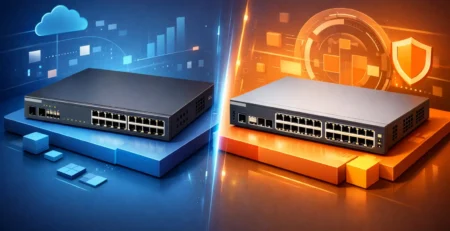
A practical router-switch price list starts with product family segmentation. Core switches, access switches, aggregation switches, branch routers, edge routers, and wireless-integrated routing platforms belong in separate pricing groups because they serve different roles and carry different cost structures.
Within each category, model-specific detail matters. Technical buyers do not shop for a generic 24-port switch. They compare exact platforms based on interface type, switching capacity, forwarding rate, power budget, uplink architecture, rack form factor, and supported modules. A usable commercial list should therefore identify the product family, exact model, condition or availability status, and any major dependency that changes price.
That dependency is often overlooked. In many environments, the base hardware cost is only one part of the quote. Power supplies, transceivers, stacking cables, network modules, licenses, memory, flash, and support entitlements can shift the final spend significantly. A low initial unit price may not stay low once the required accessories are added.
Why router and switch pricing varies so much
Enterprise networking hardware is priced by capability, not by appearance. Two switches with the same port count can sit in completely different price brackets if one includes higher PoE output, Layer 3 functionality, modular uplinks, advanced security features, or stacking bandwidth intended for campus deployments.
Routers follow the same pattern. A compact branch router may look economical at first glance, but pricing rises quickly when throughput, VPN performance, SD-WAN support, interface module compatibility, or redundancy features become mandatory. Buyers planning for remote offices often discover that the right router is defined less by port count and more by application load and service expectations.
Vendor lifecycle also affects pricing. Current-generation models often reflect active support programs, newer silicon, and software roadmap continuity. Older models may still be commercially attractive for maintenance, compatibility, or phased upgrades, but availability can become uneven. In those cases, price is influenced by sourcing difficulty as much as by original list value.
Router-switch price list ranges by category
While exact commercial pricing depends on brand, model, stock status, and configuration, category-based ranges help frame procurement discussions.
Entry-level business routers typically sit at the lower end of the spectrum when they are designed for small offices, basic WAN connectivity, or light security workloads. Once routing platforms are intended for branch standardization, encrypted traffic handling, application-aware policies, or module-based expansion, the price band moves higher. For larger edge deployments or data-intensive sites, enterprise routers can become a major budget line item.
Switch pricing follows a similar ladder. Fixed-configuration access switches are usually the most approachable from a unit-cost perspective, especially in non-PoE variants. Add full PoE+, multigig interfaces, advanced Layer 3 capabilities, or high-speed uplinks, and the delta becomes substantial. Distribution and core switches introduce another step change because backplane capacity, redundancy, and modularity matter more than simple port count.
This is where buyers benefit from a structured router-switch price list rather than broad web pricing assumptions. Comparing equipment by network role prevents a branch access switch from being evaluated against a core-ready chassis or a basic WAN router from being mistaken for a service-rich edge platform.
The hidden cost behind the listed price
A price list is useful only when it reflects the complete buying picture. In enterprise procurement, the listed hardware figure can be misleading if the deployment also requires optics, redundant power, interface cards, controller integration, or software activation.
Licensing is one of the biggest variables. Some platforms ship with core functionality enabled, while others rely on term-based or feature-tier licensing for security, routing, automation, or analytics. Two identical units may be priced differently in real projects because the software package is different. Procurement teams should always ask whether the quoted amount covers hardware only or the functional configuration required in production.
Shipping and lead time also matter. A lower figure is not necessarily the better purchase if the hardware cannot be delivered within the outage window or project schedule. For replacement scenarios, availability is often more valuable than marginal price savings. This is especially true when an organization needs exact part-number continuity for installed Cisco or Huawei environments.
How to read a vendor-ready price list
Technical buyers should read pricing in context of deployment intent. If the requirement is branch refresh, compare routers against branch traffic profiles, VPN demand, uplink type, and failover expectations. If the requirement is campus switching, weigh switch cost against PoE load, access-layer density, uplink oversubscription, and future expansion.
It also helps to separate standardization purchases from one-off replacements. Standardization usually favors current families with support continuity and cleaner lifecycle planning. Replacement buying often prioritizes exact compatibility, especially when the installed base includes older modules, software dependencies, or fixed design templates.
For that reason, the best commercial lists are not merely large. They are precise. They help buyers identify where a lower-cost substitute is valid and where it creates operational risk.
Router-switch price list questions procurement teams should ask
Before approving any networking purchase, procurement should confirm whether the model is new, refurbished, or sourced from existing inventory channels; whether accessories are included; whether the software level matches the deployment requirement; and whether the hardware is tied to a broader bill of materials.
They should also check if the equipment is intended for immediate deployment, sparing strategy, lab use, or phased migration. The right buying decision changes with the use case. A spare unit for continuity planning may be evaluated differently from a platform selected for a five-year branch standard.
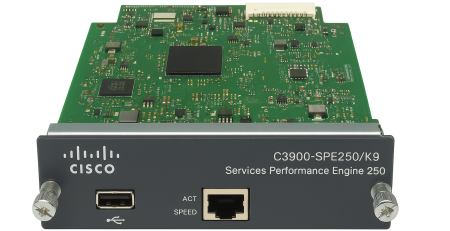
This is where supplier depth matters. A provider with a catalog built around enterprise infrastructure categories can usually support more exact procurement conversations than a general IT reseller. Gear Net Technologies LLC, for example, operates in the part-specific end of the market where modules, power supplies, controllers, and model-level compatibility often matter as much as the main chassis.
When a lower price is the wrong choice
The least expensive option can create downstream cost in several ways. It may omit required licenses, arrive without compatible accessories, or force a compromise on throughput or uplink architecture that becomes visible only after deployment. In switching, a cheaper model may appear sufficient until PoE budget limitations affect phones, access points, or surveillance devices. In routing, an underspecified platform may perform poorly once encrypted traffic and security policies are active.
There is also the risk of inconsistent sourcing. If a procurement team buys hardware from multiple channels without a clear compatibility standard, support and maintenance become harder to manage. Matching software versions, validating transceiver support, and standardizing field replacements all become more time-consuming.
A stronger pricing exercise therefore looks beyond unit cost. It asks whether the hardware supports the intended design, whether the vendor family fits the installed environment, and whether future procurement will remain consistent.
Building a smarter price comparison process
For most organizations, the best approach is to compare pricing at three levels: the base unit, the deployment-ready configuration, and the lifecycle scenario. The base unit shows hardware cost. The deployment-ready configuration includes licenses, power, optics, and required accessories. The lifecycle scenario accounts for support continuity, sparing strategy, and whether the platform aligns with current network standards.
This method produces a more accurate router-switch price list for internal decision-making. It also helps procurement and engineering stay aligned. Finance gets cleaner budget visibility, while technical teams avoid buying a platform that looks economical only because key components were excluded from the quote.
That alignment is especially valuable in multi-site rollouts, maintenance contracts, and urgent replacement events. In each case, procurement speed improves when the buying framework is already tied to model families, approved configurations, and realistic pricing bands.
A useful router-switch price list is not a static spreadsheet. It is a working reference built around exact hardware requirements, vendor compatibility, and sourcing reality. Buyers who treat it that way make faster decisions, avoid specification gaps, and protect network continuity when timing matters most.
The best next step is simple: price the hardware you actually need, not the hardware that looks cheapest at first glance.

I am an enthusiastic tech blogger with 15 years of experience in the technology field. I am passionate about sharing valuable insights and helping people who are interested in technology gain useful and practical information. I am originally from Mumbai, India.