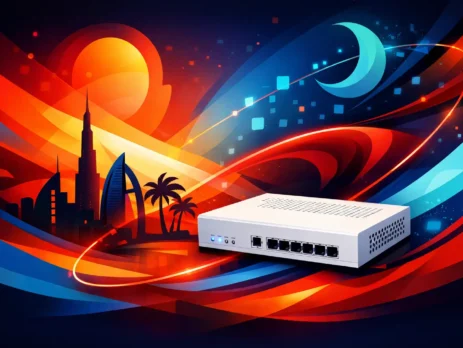
FortiGate 81F UAE Buying Guide
If you are evaluating a fortigate 81f uae purchase, the real question is not whether the appliance is capable. It is whether its performance profile, interface mix, and licensing model fit your branch, distributed office, or mid-sized edge environment without creating avoidable cost later.
The FortiGate 81F sits in a part of the market where buyers usually need more than basic firewall throughput but do not want to overbuy into a larger chassis. That makes it a common consideration for companies standardizing branch security, replacing aging perimeter hardware, or building consistent security policy across multiple sites. For procurement teams and network engineers, model selection at this level is less about marketing claims and more about practical fit.
Where the FortiGate 81F fits
The 81F is generally suited to organizations that need a compact next-generation firewall with enough headroom for security services, VPN, segmentation, and day-to-day branch traffic. In many environments, it is considered for retail branches, medical offices, professional services firms, logistics sites, and regional enterprise offices where uptime and centralized management matter.
Its appeal comes from balance. Buyers get enterprise-class Fortinet security features in a platform that remains practical for distributed deployment. That matters if you are rolling out several units across a multi-site estate and need a repeatable hardware standard rather than a one-off solution.
Still, fit depends on how the box will actually be used. A site with straightforward internet breakout, SD-WAN participation, and a modest number of users has very different demands than a branch terminating heavy VPN traffic, inspecting encrypted sessions at scale, and supporting voice, wireless, cameras, and local server access all at once.
FortiGate 81F UAE considerations for business buyers
When buyers search for FortiGate 81F UAE, they are usually comparing three things at the same time: appliance specifications, commercial availability, and deployment timing. The product itself is only one part of the purchase decision.
In the UAE market, sourcing speed can matter as much as the model choice. A failed edge firewall, expansion project, or customer onboarding window can turn a planned purchase into an urgent one. That is why technical buyers often look beyond the headline model and verify hardware condition, lead time, region-specific availability, and whether the unit is being purchased with the right subscription bundle or support coverage.
There is also the question of lifecycle alignment. Some organizations want current production hardware for new installations. Others need the exact unit to match an existing deployed base for policy consistency, spare strategy, or staged migration. Those are different procurement scenarios, and the right supplier should understand both.
Performance is only useful in context
Published performance numbers are helpful, but they should not be treated as a guarantee of live network behavior. Throughput shifts based on enabled services, traffic patterns, SSL inspection, concurrent sessions, and VPN load. A firewall that looks comfortably oversized on paper can feel tight if the branch depends heavily on encrypted SaaS traffic and full security inspection.
That does not make the 81F a poor choice. It simply means sizing should reflect actual use. If your environment prioritizes secure SD-WAN, branch segmentation, cloud application access, and centralized visibility, the platform may be well placed. If the site is heading toward heavier east-west traffic, larger user counts, or aggressive inspection policies, it may be smarter to compare upward before standardizing.
Port density and interface planning
A common purchasing mistake is to focus on security features while overlooking interface needs. Port availability, WAN design, VLAN strategy, and handoff requirements all affect deployment simplicity. For some branches, the appliance will terminate dual ISP links, connect to managed switches, support separate voice and user networks, and potentially integrate with out-of-band or LTE failover designs.
That is why interface planning should happen before procurement approval. If the branch design is simple, the 81F can be straightforward to deploy. If the site has accumulated exceptions over time, the hardware decision should be validated against the actual rack diagram and addressing plan rather than a generic branch template.
What to verify before buying a FortiGate 81F UAE unit
Serious buyers usually move faster when they ask the right questions early. For a FortiGate 81F UAE order, those questions should cover hardware specifics, software entitlement, and operational fit.
First, confirm the exact commercial configuration. Some orders fail internally because the team requested the appliance but not the right support term or security bundle. If your security policy depends on advanced threat services, web filtering, IPS, or centralized management integration, the licensing conversation is not optional.
Second, verify whether this is a new deployment, replacement, or expansion. A replacement project may require rapid delivery and close version alignment with existing devices. An expansion project may need consistency with template-based rollout standards. A new deployment may need a broader review including rack readiness, internet provider design, and future branch growth.
Third, check operational dependencies. If your firewall strategy depends on VPN interoperability, high availability planning, cloud logging, or integration with a wider Fortinet stack, those dependencies affect both hardware choice and budget. The appliance may be technically suitable but commercially incomplete if the software and support layers are not specified correctly.
Sourcing and procurement trade-offs
Enterprise firewall buying is rarely just a technical decision. It is also a supply chain decision. Buyers often need the right balance between price, lead time, supportability, and procurement certainty.
The lowest quoted number is not always the lowest project cost. Delayed fulfillment, incomplete bundling, unclear support status, or mismatched region handling can create downstream issues that cost more than the savings. For integrators and IT teams working against rollout schedules, predictability usually matters more than a marginal price difference.
This is where a technical supplier adds value. A provider focused on infrastructure hardware can help validate part selection, clarify what is included, and reduce procurement friction. For businesses buying in Dubai or elsewhere in the UAE, local fulfillment capability can also reduce delay when replacement timelines are tight.
Gear Net Technologies LLC operates in this type of procurement environment, where buyers need exact model alignment and practical sourcing support rather than generic product listings.
When the 81F is the right choice – and when it is not
The FortiGate 81F is a strong fit when you need a branch firewall that supports modern security functions without moving into a larger platform class. It can make sense for standardized branch architectures, controlled user populations, and sites where centralized security policy matters.
It may be less ideal when the branch is expected to grow rapidly, terminate a high number of VPN users, or carry inspection-heavy traffic well beyond current baselines. It can also be the wrong fit if your local design has become unusually dense in terms of interfaces, local services, or segmentation requirements. In those cases, choosing a higher model upfront may avoid an early refresh cycle.
There is also a budget reality. Some buyers over-spec because they want maximum future-proofing, while others under-spec because they are trying to hit a procurement threshold. Both approaches can create problems. The better approach is to map the appliance to a three-year operating plan that reflects real traffic growth, security policy, and branch role.
Deployment planning after purchase
Once the unit is selected, deployment discipline matters. Firewall projects often slip not because of hardware issues but because pre-staging, policy mapping, ISP coordination, and change control were handled too late. Even a straightforward branch cutover benefits from validating firmware approach, configuration templates, interface mapping, and rollback procedures in advance.
For multi-site rollouts, consistency is usually the bigger priority than raw speed. Standard naming, reusable policy sets, and documented WAN failover behavior make support easier long after the purchase order is closed. That matters to managed service providers, internal network teams, and regional IT groups responsible for ongoing operations.
The FortiGate 81F works best when it is treated as part of a broader network and security design, not as an isolated box purchase. Buyers who size it carefully, source it correctly, and deploy it against a defined branch standard usually get the most value from the platform.
If you are preparing a FortiGate 81F purchase, the best next step is to validate the model against your actual branch role, service stack, and delivery timeline before committing the order.

I am an enthusiastic tech blogger with 15 years of experience in the technology field. I am passionate about sharing valuable insights and helping people who are interested in technology gain useful and practical information. I am originally from Mumbai, India.