Huawei SFP Module Review for Enterprise Use
When a link starts flapping, the transceiver is often blamed last and replaced first. That is exactly why a proper Huawei SFP module review matters. In enterprise networks, optics are small components with outsized operational impact, especially when uptime, compatibility, and replacement speed all affect service delivery.
For most buyers, the question is not whether Huawei SFP modules work. It is which module fits the switch, route, distance, fiber type, and procurement model without introducing avoidable risk. Huawei has a broad optics portfolio, and the practical value depends less on the brand label and more on matching the module to the environment.
Huawei SFP module review: where these optics fit
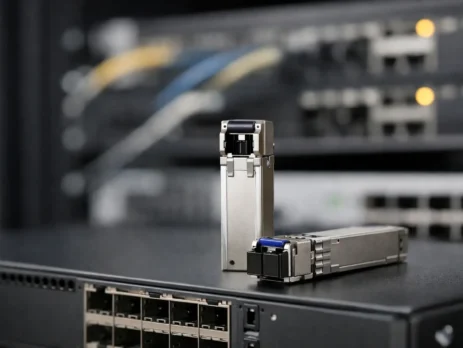
Huawei SFP modules are commonly deployed across campus switching, enterprise access layers, aggregation links, and service provider edge environments. The range includes standard 1G SFP, 10G SFP+, and higher-speed optical families in broader Huawei networking ecosystems. In the context of a buying review, the strength of Huawei modules is not novelty. It is portfolio depth, predictable use cases, and straightforward alignment with Huawei hardware platforms.
That matters for businesses running Huawei switches and routers that enforce compatibility at the EEPROM or software level. In those cases, using the correct coded module can reduce deployment friction, prevent unsupported transceiver alarms, and simplify support workflows. For buyers managing mixed fleets, however, the decision gets more nuanced. A Huawei optic may be technically sound but still be the wrong commercial choice if the environment is heavily standardized around another coding profile or a universal third-party optics strategy.
Build quality and performance expectations
From a hardware perspective, Huawei SFP modules generally meet the baseline expectations for enterprise optics. Housing quality is solid, latch mechanisms are consistent, and insertion fit is usually reliable across supported Huawei interfaces. Thermal behavior is typically stable in normal data closet and rack conditions, assuming the host platform itself has proper airflow.
Performance is less about surprising upside and more about consistency. Short-range multimode modules such as 1000BASE-SX class optics are usually chosen for intra-building runs, while LX, LH, or single-mode variants cover longer distances. In practice, the optical signal quality and negotiated link stability are acceptable when fiber plant conditions are good and the module is correctly matched to wavelength, connector type, and reach.
Where buyers sometimes overestimate module capability is distance tolerance. A 10 km single-mode optic is not a suggestion to push degraded plant to 10 km and hope for the best. Clean connectors, proper loss budgets, patch quality, and correct launch conditions still matter. A transceiver review should always separate module performance from cabling faults, dirty end faces, or marginal patching.
Compatibility is the real buying issue
The most useful Huawei SFP module review is really a compatibility review. That is where procurement errors happen.
Huawei optics are best suited to Huawei switches, routers, and supported interface cards where platform validation matters. On supported hardware, they can provide a cleaner operational path with fewer warning states and fewer questions during troubleshooting. If the objective is to maintain vendor-aligned infrastructure, original Huawei-coded optics make sense.
In mixed-vendor environments, the picture changes. Some network teams run Huawei at the access layer and another vendor at aggregation or core. Others maintain legacy Huawei gear alongside newer platforms. In those cases, compatibility has to be verified at the exact model and software release level. Generic assumptions such as “all SFP is interchangeable” create avoidable outages. Form factor fit does not guarantee coding acceptance, DOM support, or stable operation.
This is also where procurement teams need to distinguish between genuine Huawei modules, compatible coded modules, and older stock pulled from previous projects. Each option can be viable, but not for the same purpose. If uptime and supportability are priorities, exact part matching is usually the safer path.
Huawei SFP module review by common use case
For 1G access and uplink deployments, Huawei SFP modules are a practical fit. They are commonly used in campus switches, branch routers, and distribution links where 1G fiber is still active. These modules remain relevant because many enterprise environments are not replacing every access-layer uplink with 10G at once. For expansions, replacements, and maintenance, 1G optics continue to move in volume.
For 10G environments, Huawei SFP+ modules are more sensitive to design discipline. Cable quality, optical budget, and host compatibility become less forgiving. Buyers upgrading aggregation or server-facing links should validate not just port speed, but FEC behavior where applicable, switch support matrices, and the exact optical standard needed. Choosing SR instead of LR, or vice versa, is a common purchasing mistake that adds cost or delays deployment.
For long-distance or specialized links, the review becomes more application-specific. Bidirectional optics, CWDM variants, or extended reach modules can solve real infrastructure constraints, but only when the design is deliberate. These are not products to select based on price alone. Small savings on a specialty optic can create major support issues if wavelength pairing or path design is misunderstood.
Strengths and trade-offs
The strongest case for Huawei SFP modules is straightforward. They are well suited to Huawei network hardware, available across a wide range of distances and transmission types, and practical for enterprises that value stable, vendor-aligned deployments. For replacement cycles, they are especially useful when the priority is restoring service quickly with a known-compatible part.
The trade-offs are also clear. Huawei optics are not automatically the best choice for every network, especially where procurement policy favors a single cross-vendor transceiver strategy. Cost can vary depending on availability, module type, and whether the requirement is current-generation stock or harder-to-source legacy inventory. Lead time also matters more than many buyers expect. A low-cost module that arrives late is not low cost if it extends downtime.
Another trade-off is support visibility. Some teams want full vendor traceability for every transceiver in production. Others are comfortable with quality-tested compatible optics for noncritical links. Neither approach is universally right. It depends on service-level expectations, internal standards, and how the organization handles maintenance windows and incident response.
What to verify before buying
Before ordering Huawei optics, buyers should confirm five practical details: host device model, required speed, fiber type, connector standard, and target distance. That sounds basic, but many transceiver errors happen because one of those five was assumed instead of validated.
It is also worth checking software behavior on the host platform. Some switches accept a module physically but report warnings, disable diagnostics, or log unsupported transceiver messages. For enterprise operations, that can become a support issue even when the link comes up.
Part number discipline matters as well. Procurement teams should avoid broad descriptions like “Huawei 1G fiber module” when requesting quotes. Exact model identification reduces returns, speeds sourcing, and avoids confusion between similar optics with different reaches or wavelength specifications.
For organizations managing spares, there is a separate consideration. Standardizing a smaller set of widely used Huawei-compatible optical part numbers can make field replacement easier than stocking a large mix of niche modules. That approach works best when the network design itself has been rationalized around common distances and media types.
Is Huawei the right choice for your optics strategy?
If your environment is primarily Huawei, the answer is usually yes. Huawei SFP modules are a sensible choice for consistency, support alignment, and lower operational friction. They fit well in enterprise maintenance programs, staged upgrades, and exact replacement scenarios.
If your environment is mixed, the right answer depends on your standards. Some teams prioritize native coding per installed vendor. Others optimize around validated third-party optics to simplify inventory. A serious review should not treat either model as universally superior. It should ask what reduces risk in your actual network.
For buyers sourcing at scale or supporting regional deployments, availability can be just as important as technical fit. A capable supplier with access to specific Huawei module families, including older or harder-to-find parts, can save more time than any paper specification. That is especially true during outage response, project expansion, or hardware refresh cycles where exact transceiver matching is time-sensitive.
The useful way to think about Huawei optics is not as commodities, but as low-cost control points in overall network reliability. Get the part number, host compatibility, and link design right, and they do their job quietly. That is exactly what most enterprise buyers need.

I am an enthusiastic tech blogger with 15 years of experience in the technology field. I am passionate about sharing valuable insights and helping people who are interested in technology gain useful and practical information. I am originally from Mumbai, India.