c9300-24t-a Switch Specs and Buying Fit
Procurement mistakes on access switching usually start with one small assumption: that every 24-port Catalyst model is interchangeable. The c9300-24t-a is a good example of why that thinking causes delays, mismatched uplinks, or licensing confusion later in the project. On paper, it sits in a familiar enterprise access layer category. In practice, buyers need to check port type, software tier, uplink path, and deployment role before treating it as a like-for-like replacement.
What the c9300-24t-a actually is
The c9300-24t-a is part of the Cisco Catalyst 9300 Series, a widely deployed enterprise switching family used for campus access, branch infrastructure, and secure wired edge deployments. The 24T designation points to 24 data ports, typically 10/100/1000 copper interfaces, while the A suffix refers to the Network Advantage software tier.
That detail matters because this model is not simply a hardware choice. It is also a feature set decision. Buyers comparing similar Catalyst 9300 variants often focus first on port count, but the license level can materially affect routing capabilities, segmentation strategy, automation options, and long-term network design.
For organizations standardizing on Catalyst access switching, this model is often considered when PoE is not required on every port and when advanced software functionality is still needed. That makes it relevant for user access areas with locally powered endpoints, aggregation of non-PoE edge devices, and office environments where power delivery is not the primary requirement.
c9300-24t-a in real deployment planning
A switch like the c9300-24t-a is rarely purchased in isolation. It is usually part of a refresh cycle, expansion project, or replacement event. In those scenarios, the model fit depends less on the headline series name and more on how it will sit inside the existing access layer.
If the project requires powering phones, cameras, or wireless access points directly from the switch, a non-PoE 24T unit may not be the right answer. If the site already uses separate power injectors or has endpoints with independent power sources, then this model can be a cleaner and more cost-controlled option. That trade-off is straightforward, but it often gets overlooked when teams are working quickly from partial BOMs.
The other common planning issue is uplink expectation. Catalyst 9300 platforms can be configured with different uplink modules depending on the exact hardware options in the deployment. Buyers should verify the uplink requirement against distribution layer design, fiber availability, and target throughput instead of assuming a standard uplink configuration across all installed switches.
Key hardware and software considerations
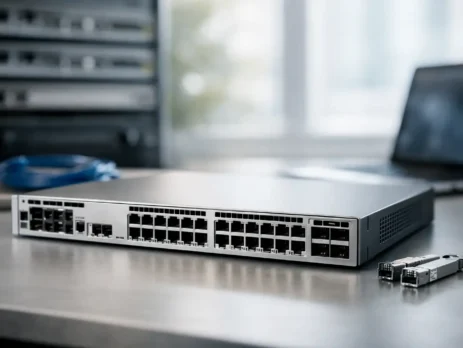
At a base level, the c9300-24t-a addresses a familiar enterprise requirement: 24 copper access ports in a fixed form factor switch designed for campus-class operation. But technical buyers usually care about the second layer of detail, where product fit becomes clearer.
Port profile and endpoint type
This model is oriented toward copper-connected devices that do not depend on switch-delivered power. For desktop environments, printers, branch appliances, thin clients, and other standard Ethernet devices, that can be entirely appropriate. For heavy IP telephony or wireless edge density, it may not be.
That means the switch can be a strong fit in mixed environments where some closets need PoE-heavy models and others do not. Standardizing every closet on PoE hardware is not always the most efficient purchasing decision, especially when a portion of the network serves data-only endpoints.
Network Advantage licensing
The A designation is one of the most important elements in the part number. Network Advantage is aimed at organizations that need a more capable software feature set than base access switching alone. Depending on the architecture, this can matter for advanced Layer 3 functions, policy-driven segmentation, and integration into broader Cisco enterprise frameworks.
For procurement teams, this means the hardware cost should be evaluated together with the operational requirement. If the deployment only needs basic Layer 2 access switching, a higher software tier may be unnecessary. If the switch is expected to support more advanced campus design or future service expansion, buying too low can create a different kind of cost later.
Stack strategy
Catalyst 9300 switches are often deployed in stacks to simplify management and improve operational continuity. When the c9300-24t-a is entering an existing stack environment, compatibility planning becomes critical. Buyers should confirm software alignment, stack design standards, and whether the target environment is homogeneous or mixed across hardware revisions.
A stack can reduce management overhead and provide operational advantages, but it also means replacement purchasing is less forgiving. An exact part match is often preferred when maintaining consistency in production networks.
Power supply and airflow planning
Enterprise switch procurement is not only about the base chassis. Power supplies, fan considerations, rack density, and regional power standards all affect the final deployment package. A model may appear available, but if the required PSU pairing or site-specific accessory set is missing, the procurement cycle slows down.
For data rooms and distributed branch sites alike, those details are practical, not cosmetic. The right accessory match reduces installation delays and avoids piecemeal sourcing after the main hardware arrives.
Where the c9300-24t-a makes sense
The c9300-24t-a usually fits best where enterprise access features are required but PoE is not central to the design. That includes office floors with workstation connectivity, financial or administrative environments with standard desktop Ethernet drops, and branch sites with separately powered edge devices.
It can also make sense in staged refresh projects. Many organizations do not replace every switch on the same schedule. Some segments need advanced software and modern access switching now, while other areas still run on a different power model or endpoint profile. In those cases, this switch can fill a specific role without forcing overbuild.
There is also a budget discipline benefit. Not every access layer requirement justifies buying PoE-capable hardware across the board. Where power delivery is unnecessary, a non-PoE model can align more closely with actual use while still supporting enterprise-grade switching policy.
Where buyers should pause
The c9300-24t-a is not the right answer for every 24-port Catalyst request. If the environment is voice-heavy, wireless-heavy, or camera-dense, buyers should stop at the power requirement first. A switch that cannot meet endpoint power demand will immediately push cost elsewhere through injectors, redesign, or replacement.
There is also the issue of software overbuying. Network Advantage has value, but only when the deployment can use that value. Some procurement teams inherit part numbers from older quotes or template builds without checking whether the software tier still matches the actual project. In those cases, the part may be technically sound but commercially inefficient.
Legacy replacement is another area where caution helps. A failed older switch may have been serving as a simple edge device for years, but the surrounding network may have evolved. Replacing it with a newer Catalyst platform can be a smart move, though it should be validated against optics, uplink design, software standards, and rack power assumptions.
Sourcing the right unit matters as much as choosing the model
For enterprise buyers, product selection and sourcing quality are tightly connected. A correct model number does not solve every risk. Hardware condition, lead time, packaging completeness, licensing status, and accessory inclusion all affect whether the purchase actually meets operational need.
That is especially relevant for organizations managing multi-site rollouts, maintenance stock, or urgent replacement events. A switch may be technically suitable, but if the delivered unit lacks the required components for installation, the project still loses time. This is why many IT procurement teams work with suppliers that understand exact part matching rather than general category selling.
For buyers in regional and cross-border procurement environments, availability can be as important as specification. A supplier with infrastructure hardware depth can often help confirm whether the requested c9300-24t-a aligns with the intended deployment or whether a nearby variant is a better fit based on power, license tier, or port behavior. That consultative step is often more valuable than a simple stock confirmation.
Buying questions worth asking before you place the order
Before purchasing the c9300-24t-a, confirm whether the site needs PoE, which uplink path the switch must support, and whether Network Advantage is required by policy or architecture. It also helps to verify if the switch will operate standalone or inside an existing stack, since that can affect software consistency and deployment planning.
If the switch is part of a replacement cycle, ask one more question: are you matching the old hardware role, or are you correcting an old design limitation while replacing it? Those are not the same project, and they should not produce the same BOM.
Gear Net Technologies LLC serves buyers who need that level of precision, especially when part-specific sourcing, enterprise hardware compatibility, and procurement speed all matter at once.
The best switch purchase is usually the one that prevents the next round of troubleshooting before it starts – and that only happens when the part number matches the network, not just the quote.