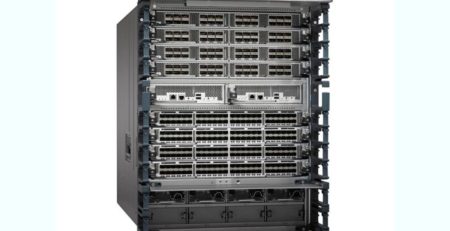
ISR vs ASR Routers for Enterprise Networks
Cisco ISR routers are generally built for service-rich branch networking, while Cisco ASR routers are built for higher-scale aggregation and edge routing. That role-based distinction is the practical starting point when comparing ISR vs ASR Routers. The right choice depends on the site role, traffic profile, enabled services, interface needs, routing scale and growth plan.
Gear Net Technologies LLC (GNTME) is a Dubai, UAE wholesale catalogue for Cisco routers and other IT and network hardware. IT integrators, procurement teams, MSPs, data-centre teams and enterprise IT buyers can compare the two families here, then send an enquiry to request a quotation for the exact router, modules and licences required. Begin selection with the site role, throughput under enabled services, WAN handoff, interface needs, software, compatibility and lifecycle.
Cisco ISR vs ASR Routers: Core Differences
ISR stands for Integrated Services Router. Cisco ISR platforms are primarily designed for branches and distributed enterprise sites, combining routing with integrated network services that might otherwise require separate appliances. Depending on the model and licence set, those services can include WAN routing, encrypted VPNs, firewall functions, SD-WAN, voice gateway functions, wireless connectivity, cellular WAN backup and switching interfaces.
ASR stands for Aggregation Services Router. Cisco ASR platforms are designed for higher-scale routing at enterprise WAN hubs, data-centre and internet edges, provider aggregation points and large regional sites. Beyond port speed, they are intended for greater forwarding capacity, larger route tables, higher interface density, hardware-based packet processing and more demanding availability requirements.
In practical terms, ISR is the service-rich branch family; ASR is the scale-focused aggregation and edge family. This is a family-level distinction, not a substitute for model validation: always check the exact hardware, software image, licence entitlement, interface support and lifecycle before procurement.
Best Uses for Cisco ISR Routers
Choose an ISR for a branch or distributed site that needs routing and several integrated services in one platform. A regional office, for example, may need a primary WAN circuit, secondary broadband, site-to-site VPN, segmented LAN connectivity and policy-based handling for cloud applications. Consolidating those functions can reduce the number of separate devices that must be purchased, powered, monitored and replaced.
The ISR 1000 and ISR 4000 families are common examples for enterprise branch refreshes. Capabilities vary by chassis and software release, so size the platform for expected WAN throughput with required services active. Then match the router with compatible Ethernet, serial, cellular, voice or network interface modules and verify any required ISR 4000 licences.
Integrated services are the key consideration. Encryption, firewall inspection, application-aware routing, and SD-WAN features consume resources. A router may deliver acceptable raw forwarding performance but fall short once IPsec, security policies, QoS, and advanced services are enabled simultaneously. Capacity planning should therefore use the vendor’s performance figures for the actual feature set, not an unlicensed or services-disabled throughput number.
ISR platforms also remain valuable when an organization needs continuity with legacy branch designs. Some environments still depend on PRI, analog voice, serial WAN, or specialized interface requirements during phased modernization. Confirm slot type, module generation, supported IOS XE release, power supply requirements, and license status before sourcing replacement hardware.
Best Uses for Cisco ASR Routers
ASR routers are appropriate when the network must aggregate substantial traffic from many branches, customers, circuits, or upstream providers. An enterprise may use an ASR at a central hub to terminate many WAN connections, maintain large routing tables, apply QoS at higher speeds, and connect to multiple carriers. In a service provider environment, the same class of platform may support broadband aggregation, MPLS services, internet transit, or mobile backhaul.
The ASR 1000 family is often considered for enterprise edge and WAN aggregation deployments where service-rich routing must operate at higher throughput than a branch ISR can provide. These systems use hardware acceleration and scale more effectively for high-bandwidth encrypted traffic, extensive VPN termination, and dense WAN connectivity. The appropriate model depends on required throughput, interface options, route scale, redundancy design, and software licensing.
Cisco ASR 9000 platforms address a different tier of requirements. They are carrier-class systems for service provider and large-scale aggregation networks, with IOS XR software architecture and chassis or modular configurations in many product lines. They should not be treated as a direct substitute for an ISR simply because both are routers. Their operational model, optics requirements, power design, licensing, and support needs are materially different.
For an enterprise buyer, an ASR becomes justified when the edge has become a shared infrastructure point rather than a single-site router. High-speed internet handoffs, multiple 10GbE or higher links, substantial BGP requirements, large IPsec deployments, and centralized WAN aggregation are typical triggers.
Compare Router Performance Beyond Port Speed
Port speed alone does not show whether an ISR or ASR can sustain the intended workload. A 1GbE, 10GbE or faster interface describes physical connectivity; the meaningful comparison is forwarding performance with the required routing, VPN, security, QoS and other services enabled.
For example, a branch site with a 1 Gbps internet circuit may not need an ASR if actual encrypted and inspected traffic is well below the ISR’s supported service throughput. Conversely, a hub with several 1GbE circuits may require an ASR even if no individual port exceeds 1 Gbps. The aggregate traffic load, packet size distribution, routing policy complexity, tunnel count, and resiliency requirements can push the design beyond a branch platform.
Route scale matters as well. BGP-heavy environments, multiple VRFs, large prefix tables, and complex redistribution policies need sufficient memory and control-plane capacity. An ASR is generally better suited to these conditions, but model-specific limits must be checked. Do not assume that every ASR supports the same scale, nor that every ISR has the same module or feature support.
Check Cisco Software, Licensing and Lifecycle
Many ISR and ASR platforms use IOS XE, especially in enterprise routing, but shared software does not make the hardware interchangeable. Feature support varies by generation, release, licence tier and subscription status. Validate SD-WAN, security, throughput entitlement, automation and cryptographic capabilities against the exact product identifier and installed software.
ASR 9000 systems use IOS XR rather than IOS XE. This is significant for operations teams because configuration conventions, software management, telemetry, and lifecycle processes differ. A team accustomed to ISR branch routers may need additional engineering preparation before deploying IOS XR platforms.
For new, surplus, or replacement equipment, verify the full bill of materials. A usable router procurement may require the chassis, power supply, fan tray, route processor or embedded controller components, interface modules, transceivers, rack hardware, memory or storage where applicable, and correct licensing. The same chassis can have very different deployment value depending on the installed modules and software entitlement.
Lifecycle status should also influence the decision. A legacy platform may be the right answer for a like-for-like replacement when compatibility and fast restoration are the priority. For a new deployment, however, an active or longer-lived family may offer better software support, security updates, and expansion options. This is especially relevant for organizations standardizing hardware across multiple sites in Africa or managing long import lead times for specific replacement components.
How to Choose Between Cisco ISR and ASR Routers
First identify the router’s role: branch endpoint, regional hub, data-centre edge or provider-facing aggregation point. Then record required WAN bandwidth, expected three-year growth, enabled services, interface and optics types, routing scale, redundancy target, software environment and management model. These requirements narrow the family and model more reliably than headline port-speed specifications.
Choose Cisco ISR for branch consolidation, moderate WAN throughput, modular local connectivity and integrated services. Choose Cisco ASR for high-capacity edge routing, dense connectivity, larger routing domains and central aggregation. Whichever family fits, size the exact model for real traffic with security, VPN, QoS and routing enabled, then validate interfaces, software, licences and lifecycle.
To request a quotation from Gear Net Technologies LLC (GNTME) in Dubai, UAE, send the intended network role, bandwidth, interfaces, enabled services, software and licence requirements, plus any preferred ISR or ASR model. GNTME handles wholesale IT and network hardware enquiries from integrators, procurement teams, MSPs, data-centre teams and enterprise IT teams.

I am an enthusiastic tech blogger with 15 years of experience in the technology field. I am passionate about sharing valuable insights and helping people who are interested in technology gain useful and practical information. I am originally from Mumbai, India.