How to Choose Core Switches for Data Center
A data center core is where design mistakes get expensive. If the switching layer cannot keep up with east-west traffic, virtualization density, storage flows, and uplink aggregation, the rest of the architecture inherits those limits. That is why selecting core switches for data center environments is less about brand preference and more about matching switching capacity, resiliency, and feature support to the actual workload.
For procurement teams and network engineers, the challenge is rarely finding a switch with impressive headline numbers. The real task is identifying the right platform class, port mix, buffering behavior, software feature set, and lifecycle fit for the environment you are building or expanding. A core switch that is oversized wastes budget and power. One that is undersized turns into a bottleneck long before the depreciation cycle ends.
What core switches do in a data center
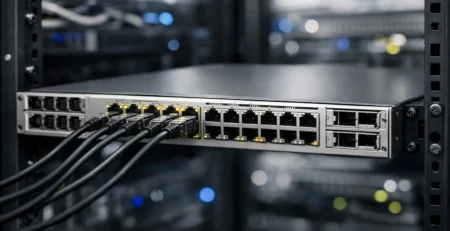
Core switches sit at the center of high-volume traffic movement inside the facility and between the data center and external networks. In many enterprise designs, they aggregate traffic from distribution or leaf layers, provide high-speed interconnects, and support critical routing and switching functions that affect application performance across the estate.
In a modern architecture, the role of the core depends on topology. In a traditional three-tier design, the core primarily provides fast transport between distribution blocks and upstream connectivity. In a leaf-spine model, the distinction changes, and what some teams call the core may function more like a spine layer. That difference matters during procurement because the required port speeds, oversubscription targets, and feature priorities can shift significantly.
Core switching decisions also affect availability planning. Redundant supervisor architecture, hot-swappable power supplies, fan modules, in-service software support, and multichassis design options are not secondary features at this layer. They directly influence maintenance windows, failover behavior, and mean time to recovery.
Core switches for data center performance planning
The first number buyers often focus on is throughput, but raw switching capacity by itself is not enough. You need to look at forwarding rate, backplane design, buffer architecture, and latency under load. Some platforms perform well in predictable enterprise traffic patterns but struggle when traffic becomes bursty, storage-heavy, or highly east-west.
Port density is the next practical filter. A platform may offer the right aggregate bandwidth but the wrong port composition. If your environment needs a mix of 10G, 25G, 40G, 100G, or 400G uplinks, the value of the chassis or fixed-form switch depends on how efficiently it maps to actual server, storage, and interconnect requirements. Buying large numbers of adapters or extra modules to make a platform fit can erode its price advantage quickly.
Latency expectations also depend on the applications you run. General enterprise workloads, backup traffic, VDI, and routine virtualization clusters can tolerate a broader range of latency profiles than high-performance databases, storage replication, or latency-sensitive transaction systems. Not every data center needs the lowest possible latency, but every buyer should know where the acceptable threshold is.
Chassis vs fixed core switches for data center design
The chassis-versus-fixed decision usually comes down to scale, fault tolerance, and growth model. Chassis-based core switches are still the right fit when you need very high slot density, redundant control planes, and expansion over time without replacing the entire platform. They also suit environments where modular uplinks, service flexibility, and long hardware lifecycles are part of the procurement strategy.
Fixed-form platforms make sense when density per rack unit is strong, port speeds are aligned to the current design, and horizontal scaling is preferable to buying a large chassis upfront. Many modern data centers favor fixed high-speed switches because they simplify deployment and can reduce both capital cost and power footprint.
There is no universal winner here. A regional enterprise running a centralized private data center may still benefit from a modular core. A cloud-heavy organization building compact, fast, repeatable pods may get better economics from fixed platforms. The wrong move is choosing a chassis because it feels more enterprise-grade or choosing fixed systems because the sticker price looks lower without accounting for future expansion.
Features that matter beyond switching capacity
Layer 2 and Layer 3 support should match the intended design, but serious buyers usually go deeper. VXLAN support, EVPN capabilities, MLAG or equivalent multichassis technologies, quality of service controls, MACsec, telemetry, and automation interfaces can all shape platform suitability.
Buffering is one area that often gets less attention than it should. If the environment handles storage traffic, burst-heavy virtualized workloads, or uneven flow patterns, buffer behavior can matter as much as nominal bandwidth. Small-buffer, low-latency platforms can be excellent in some designs and frustrating in others.
Software licensing also deserves close review. A switch may meet technical requirements at the hardware level but require additional licensing for routing scale, automation, security, or fabric features. Procurement teams should price the complete usable platform, not just the chassis or base switch.
Operational compatibility matters too. Standardizing on platforms that align with the existing vendor stack can reduce training overhead, simplify sparing, and shorten incident response. That said, standardization should not override a clear technical mismatch. If the existing platform family cannot support the next phase of bandwidth or fabric requirements, staying consistent can become more expensive than migrating.
Redundancy and risk at the core layer
At the core, single points of failure are rarely acceptable. Redundant power, fans, supervisors, control planes, and uplinks should be evaluated as part of the base design rather than as optional extras. The practical question is not whether failure will happen. It is how the platform behaves when it does.
Look at hitless failover capabilities, software upgrade options, and the maturity of the high-availability model. Vendor documentation may present graceful failover as a standard capability, but actual recovery behavior can vary depending on topology, feature use, and software release. For production environments, that difference is material.
Sparing strategy is part of risk planning as well. Some buyers optimize for minimal upfront hardware and rely on lead times for replacement. That may work for access-layer equipment. It is less comfortable at the core. For business-critical environments, access to exact replacement power supplies, supervisor modules, line cards, optics, and compatible switch models can be just as important as the initial purchase decision.
Procurement considerations for core switch buying
Technical fit is only half of the purchase. The other half is sourcing the platform in the right condition, with the right components, and on a timeline that matches the project. This becomes especially relevant when businesses are supporting mixed environments with both current and legacy switching families.
For example, a planned upgrade may depend on specific transceivers, stacking or fabric modules, power supply variants, or line cards that are easy to overlook during budgeting. If those components are unavailable or sourced incorrectly, deployment slows down even when the main switch platform is already on site.
This is where supplier capability matters. Buyers need accurate part-level identification, compatibility awareness, and access to complete hardware configurations rather than generic switch listings. For organizations handling rollouts, refresh cycles, or urgent replacements, working with a supplier focused on enterprise infrastructure categories can reduce procurement friction and avoid mismatched hardware orders.
In markets with cross-border procurement or multi-site delivery requirements, logistics support becomes part of the evaluation too. Gear Net Technologies LLC, for example, serves buyers that need enterprise networking hardware with regional fulfillment and broader sourcing support, which can be useful when replacement timelines are tight or exact SKUs are required.
When to replace existing data center core switches
Core replacement is not always triggered by failure. More often, it happens because the platform can no longer support density, speed, feature requirements, or maintenance expectations. If a core switch cannot support current uplink standards, lacks vendor support options, or forces compromises in the fabric design, it becomes a business risk even if it still passes traffic.
Power and cooling efficiency can also drive replacement. Older chassis may remain functional but consume more rack space and power than newer high-density alternatives. Over several years, those operating costs can narrow the perceived savings of keeping legacy equipment in service.
Still, replacement timing depends on context. If the existing platform supports application demand, redundancy requirements, and parts availability, extending its life may be rational. If growth plans include higher-speed server access, larger virtualization clusters, or storage modernization, delaying core refresh can create design constraints across the entire environment.
The best core switch is not the one with the longest feature sheet. It is the platform that fits your traffic profile, resilience target, expansion plan, and procurement reality without forcing expensive compromises six months later.

I am an enthusiastic tech blogger with 15 years of experience in the technology field. I am passionate about sharing valuable insights and helping people who are interested in technology gain useful and practical information. I am originally from Mumbai, India.