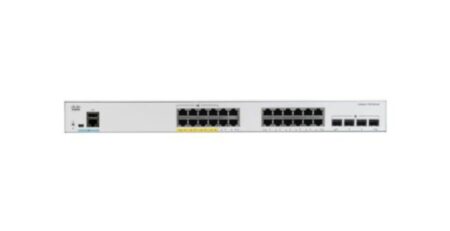
Which Cisco Router for Branch Office Needs?
A branch router gets expensive when it is undersized by 20 percent or oversized by one product tier. That is usually where the question starts: which Cisco router for branch office deployments actually fits the site, the circuits, and the security policy without adding unnecessary cost or complexity?
The right answer depends less on brand familiarity and more on branch profile. A retail store with dual broadband and SD-WAN has different requirements than a bank branch with encrypted traffic back to a data center, and both differ from a small office that only needs stable WAN access, VPN, and basic segmentation. Cisco has several router families that can serve branch environments well, but choosing correctly means looking at performance with services turned on, WAN options, licensing model, interface needs, and lifecycle position.
Which Cisco router for branch office use cases?
For most branch environments, the short list usually comes down to Cisco ISR 1000 Series, ISR 4000 Series, and in some designs Catalyst 8000 Edge platforms. Older branches may still run ISR G2 or legacy ISR 4000 models that remain in service for maintenance and replacement cycles, but for new deployments the decision should usually center on the current branch edge strategy.
If the branch is small, bandwidth is modest, and the requirement is straightforward routing, firewall features, VPN, and LTE failover, the ISR 1000 Series is often the practical fit. If the site needs higher throughput, more service flexibility, denser interfaces, voice survivability, or stronger scale for tunnels and security policies, ISR 4000 Series remains relevant in many enterprise estates. If the organization is standardizing on SD-WAN and cloud-integrated branch architectures, Catalyst 8000 is often the better long-term platform.
That sounds simple, but product family alone does not answer the buying question. Cisco performance figures vary depending on the services in use. A branch with IPsec, application-aware routing, security inspection, and segmented VLAN traffic can behave very differently from a branch that only forwards plain WAN traffic.
Start with branch profile, not model number
The most reliable selection method is to define the branch by traffic and service requirements first. User count is useful, but it is not enough on its own. A 30-user engineering branch can generate more WAN demand than a 100-user administrative office.
Begin with expected WAN bandwidth over the next 24 to 36 months. Then check whether traffic will be encrypted site-to-site, whether direct internet breakout is required, whether voice gateways are needed, and whether the branch will run SD-WAN or traditional routing. Also confirm interface requirements. Some branches still need copper handoff, some need SFP, and some need cellular backup integrated in the chassis or through an external module.
At procurement stage, this avoids one of the most common mistakes: buying a router based on nominal throughput and then discovering that real throughput drops once security and VPN services are enabled.
Small branch and remote office
For a small branch, ISR 1100 models are frequently the right starting point. These platforms fit sites such as small retail locations, remote clinics, service counters, and satellite offices where footprint, power draw, and cost control matter. They support enterprise routing functions and can suit dual-WAN designs with LTE backup depending on the exact model.
The trade-off is headroom. If the branch is expected to move quickly from basic connectivity to heavier encrypted traffic, multiple tunnels, or broader policy control, a lower-end ISR 1100 can become limiting sooner than expected. It is often better to buy slightly above the current requirement if the branch is part of an active expansion plan.
Mid-size branch
For mid-size offices, ISR 4000 Series has traditionally been a strong fit. Models such as the ISR 4331, 4351, or 4431 have been widely deployed for branch routing, VPN, voice, and service integration. They offer more modularity and generally more expansion flexibility than compact branch units.
This family makes sense when the branch needs more than basic WAN access. If the site is terminating substantial VPN traffic, hosting voice services, or requiring modular WAN and LAN options, ISR 4000 usually gives buyers a broader operating range. The caution here is lifecycle planning. Depending on the exact model, organizations should verify support status, software path, and whether a newer platform aligns better with future policy.
SD-WAN and modern branch edge
Catalyst 8000 platforms are increasingly relevant where the branch edge is part of a larger SD-WAN fabric. These routers are designed for cloud-connected, policy-driven WAN environments and can be the cleaner choice if the organization is already committed to Cisco SD-WAN architecture.
They are not automatically the best answer for every branch. If the customer only needs conventional routing and stable VPN connectivity, moving to Catalyst 8000 may add licensing and design complexity that is not necessary. But for organizations standardizing branch policy, centralized orchestration, and application-aware path selection, they are often the right strategic platform.
Throughput is the decision point most buyers underestimate
When teams ask which Cisco router for branch office sizing, throughput with features enabled is usually the critical factor. Cisco routers can process traffic at very different rates depending on whether NAT, IPsec, firewall functions, QoS, and advanced services are active.
A branch with a 500 Mbps internet circuit does not automatically need a router rated at 500 Mbps in a generic datasheet sense. It needs a router that can sustain the required real-world throughput under the exact service stack the branch will run. That includes encrypted overlays, traffic shaping, and failover events.
This is where oversimplified comparisons cause procurement delays. Two routers may both appear suitable on paper, but one may only deliver target performance with limited services, while the other has enough processing margin for policy growth. If the branch edge is likely to absorb more security or SD-WAN functionality later, selecting for headroom is usually the safer commercial decision.
Interface density, modules, and branch-specific hardware needs
Branch offices vary widely in how they connect to carriers and local infrastructure. Some need only a couple of routed ports. Others need modular expansion, voice cards, PoE support, or specific transceiver compatibility.
ISR 4000 platforms are often preferred when modularity matters. If the branch may require additional network modules, voice interfaces, or service integration over time, that flexibility can reduce replacement costs later. Compact platforms are easier to deploy but typically less adaptable.
This matters in distributed environments where standardization is imperfect. A company with mixed branch types may be better served by narrowing to two router families instead of forcing one model across every location.
Security and licensing change the total cost
Cisco branch router selection is not just a hardware exercise. Licensing can materially affect both deployment speed and operating cost. Security features, SD-WAN capability, and advanced software functions may depend on license tier and subscription structure.
That means the lowest hardware price is not always the lowest project cost. Buyers should verify what is included, what requires activation, and how the software plan aligns with the intended operating model. This is especially important in multi-site rollouts where recurring software cost becomes significant across dozens or hundreds of branches.
For procurement teams, it is worth validating three things before purchase approval: hardware capability, software entitlement, and support path. Missing any one of those can delay staging or create avoidable compatibility issues.
A practical model-selection approach
If the site is a small branch with limited users, moderate broadband, VPN, and optional cellular failover, start with ISR 1100. If the site is a larger branch with higher encrypted throughput, voice services, or interface expansion requirements, review ISR 4000 options. If the branch is part of a policy-driven SD-WAN rollout, evaluate Catalyst 8000 first.
That framework is not absolute. A small branch with aggressive bandwidth growth may justify moving up early. A mid-size office with simple WAN needs may not need the heavier platform. The correct choice is the one that fits the branch operating profile with enough margin for the next refresh cycle, not the one with the biggest specification sheet.
For organizations managing upgrades, replacements, and mixed installed bases, sourcing also matters. Exact model availability, supported accessories, power supplies, memory, modules, and replacement components can influence whether a refresh is staged in phases or done as a full swap. In that context, a supplier with category depth across current and legacy Cisco hardware can reduce downtime and simplify branch standardization.
A good branch router decision should still look sensible three years from now, when bandwidth has increased, policies have expanded, and the site has one more service than originally planned. That is usually the clearest test of whether the platform was chosen well.

I am an enthusiastic tech blogger with 15 years of experience in the technology field. I am passionate about sharing valuable insights and helping people who are interested in technology gain useful and practical information. I am originally from Mumbai, India.