Fortinet Products for Enterprise Networks
A firewall refresh rarely stays limited to the firewall. Once teams start evaluating fortinet products, the conversation usually expands into branch connectivity, switch compatibility, wireless coverage, centralized policy control, and lifecycle support. That is why Fortinet matters in enterprise procurement – not only as a security vendor, but as a platform that reaches into core network design, remote access, segmentation, and operational visibility.
For business buyers and technical teams, the real question is not whether Fortinet has a broad catalog. It does. The more useful question is which product families fit the environment you are maintaining or expanding, and where the trade-offs sit between performance, feature depth, licensing, and hardware dependencies.
Where fortinet products fit in the stack
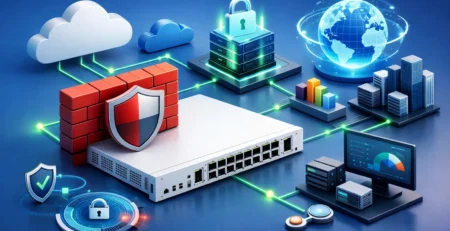
Fortinet is most often associated with FortiGate, and for good reason. FortiGate appliances are the anchor point for many deployments because they combine firewalling, VPN, intrusion prevention, application control, web filtering, and SD-WAN features in one platform. For a branch office, that can reduce hardware sprawl. For a larger enterprise, it can standardize policy and simplify rollout across multiple sites.
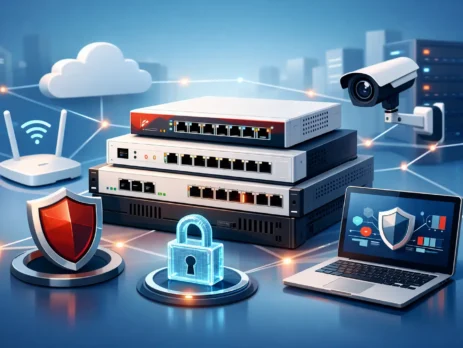
Still, buying decisions do not stop at the edge. Fortinet products extend into switching through FortiSwitch, wireless through FortiAP, centralized management through FortiManager, analytics and logging through FortiAnalyzer, and identity or access control through adjacent security tools in the Fortinet portfolio. If the goal is single-vendor alignment, this breadth is attractive. If the environment is mixed-vendor, compatibility and management boundaries need closer review.
That distinction matters during procurement. A standalone firewall purchase is straightforward. A platform decision is not. Once organizations commit to integrated policy management and coordinated security controls, replacement cycles, licensing structures, and support expectations become more interconnected.
The core Fortinet product families buyers evaluate
FortiGate firewalls
FortiGate remains the center of demand for most enterprise and midmarket environments. These appliances cover use cases from small offices to data center and campus edge deployments. Buyers typically compare models by throughput, port density, VPN scale, SSL inspection capacity, and whether the unit will run basic firewall policy or full UTM and advanced threat prevention services.
The practical challenge is that headline throughput does not always reflect production performance. Once deep inspection, logging, segmentation, and encrypted traffic analysis are enabled, capacity changes. For that reason, sizing FortiGate hardware based only on internet bandwidth can lead to underprovisioning. IT teams should map expected security services, peak concurrent sessions, WAN design, and growth horizon before selecting a model.
FortiSwitch
FortiSwitch is often considered when the buyer wants tighter integration with FortiGate. In the right design, switch management and policy enforcement become more centralized, especially for branch or distributed office environments. This can reduce administrative overhead for teams that prefer fewer management planes.
The trade-off is flexibility. In networks that already rely on another switching standard across access and aggregation layers, replacing or adding switch infrastructure just to extend Fortinet integration may not be the most economical move. It depends on whether the organization values unified control more than it values preserving an established switching estate.
FortiAP wireless
FortiAP products are relevant when enterprises want wireless tied more closely to firewall policy, segmentation, and user access controls. This can be useful in branch deployments, retail sites, education environments, and any location where wireless access needs to align with broader security rules.
Wireless selection should still be treated as a wireless design decision, not only a security decision. Coverage, client density, roaming behavior, controller requirements, and PoE availability all matter. A FortiAP rollout works best when radio planning and switching capacity are considered upfront rather than after the access points arrive.
FortiManager and FortiAnalyzer
As environments grow, centralized management becomes less optional. FortiManager helps standardize device configuration, policy deployment, and change control across multiple Fortinet assets. FortiAnalyzer adds logging, reporting, and deeper event visibility. In single-site environments these may be deferred, but in multisite organizations they often move from nice-to-have to necessary.
This is where total cost shifts. The appliance or virtual platform is only part of the budget. Teams also need to account for retention requirements, compliance reporting needs, analyst workflows, and who will own ongoing administration. Visibility is useful only if the organization can operationalize it.
How to assess Fortinet products for procurement
Enterprise buyers should approach Fortinet the same way they would approach any infrastructure platform purchase – by mapping product family to operational requirement, not by selecting from a brand catalog in isolation.
Start with the network role. Is the immediate need perimeter security, branch standardization, internal segmentation, Wi-Fi expansion, or centralized policy management across several sites? The answer changes the shortlist quickly. A branch refresh may justify FortiGate plus FortiSwitch and FortiAP. A firewall-only replacement in a mature campus may not.
Next, review compatibility with the installed base. That includes optics, uplink speeds, PoE budgets, rack space, licensing terms, and support coverage. It also includes management expectations. Some organizations want integrated vendor tooling. Others prefer to keep security, switching, and wireless under separate operational teams and systems.
Then evaluate lifecycle position. Certain buyers need the latest generation for long runway and current support. Others need exact replacement units, matching accessories, or expansion hardware for an installed environment that cannot be redesigned immediately. Procurement planning is different in each case. The right supplier must be able to support both current deployment strategy and short-notice replacement demand.
Common use cases for fortinet products
Fortinet products are frequently selected for branch office standardization because they combine routing, security, VPN, and SD-WAN capabilities in a compact footprint. That reduces the number of devices required at remote sites and can simplify deployment for managed service providers and distributed enterprises.
They are also common in organizations pursuing tighter segmentation between users, applications, and site classes. When the firewall, switch, and wireless layers can share policy context more directly, enforcement can become more consistent. That said, the benefit depends on how fully the business adopts the surrounding Fortinet ecosystem.
Another frequent use case is replacing aging security appliances under time pressure. In those situations, availability matters as much as architecture. Businesses often need a procurement partner that can source the correct hardware model, transceivers, power components, and licensing path without delaying a maintenance window or recovery plan.
What buyers often overlook
The most common oversight is assuming the appliance is the whole project. In practice, power requirements, mounting format, interface media, support entitlement, subscription renewals, and version alignment all affect deployment readiness. Even a technically correct model can create delay if the accessory set is incomplete.
Another issue is overestimating consolidation benefits. A single-vendor approach can simplify management, but it also concentrates dependency. If the business has strong reasons to keep switching or wireless separate from the security stack, forcing full platform adoption may add disruption without enough operational return.
There is also the issue of procurement timing. Security incidents, hardware failure, and expansion deadlines do not always align with ideal budgeting cycles. That is why buyers often value suppliers with deep inventory access, exact part identification, and the ability to support both planned rollouts and urgent replacement scenarios. For organizations operating across Africa, regional sourcing and export handling can make the difference between a contained outage and an extended one.
Choosing a supplier for Fortinet hardware
For enterprise procurement, product knowledge matters as much as stock access. A supplier should be able to distinguish between appliance families, compatible modules, power options, and deployment roles without reducing the conversation to generic firewall availability. This is especially relevant when the requirement includes mixed hardware generations, site-specific constraints, or a phased upgrade plan.
Buyers should also look for commercial clarity. That means accurate model identification, clean quotation structure, realistic lead times, and support for component-level procurement when a full platform replacement is unnecessary. Gear Net Technologies LLC operates in this type of procurement environment, where specificity, sourcing depth, and business-grade fulfillment matter more than broad consumer IT selection.
Fortinet can be a strong fit when the requirement is not just security at the edge, but coordinated control across the network. The value comes from choosing the right product family, sizing it correctly, and sourcing it with enough precision to avoid surprises after the purchase order is issued. A good buying decision starts with architecture, but it finishes with availability, compatibility, and the details that keep deployment on schedule.

I am an enthusiastic tech blogger with 15 years of experience in the technology field. I am passionate about sharing valuable insights and helping people who are interested in technology gain useful and practical information. I am originally from Mumbai, India.