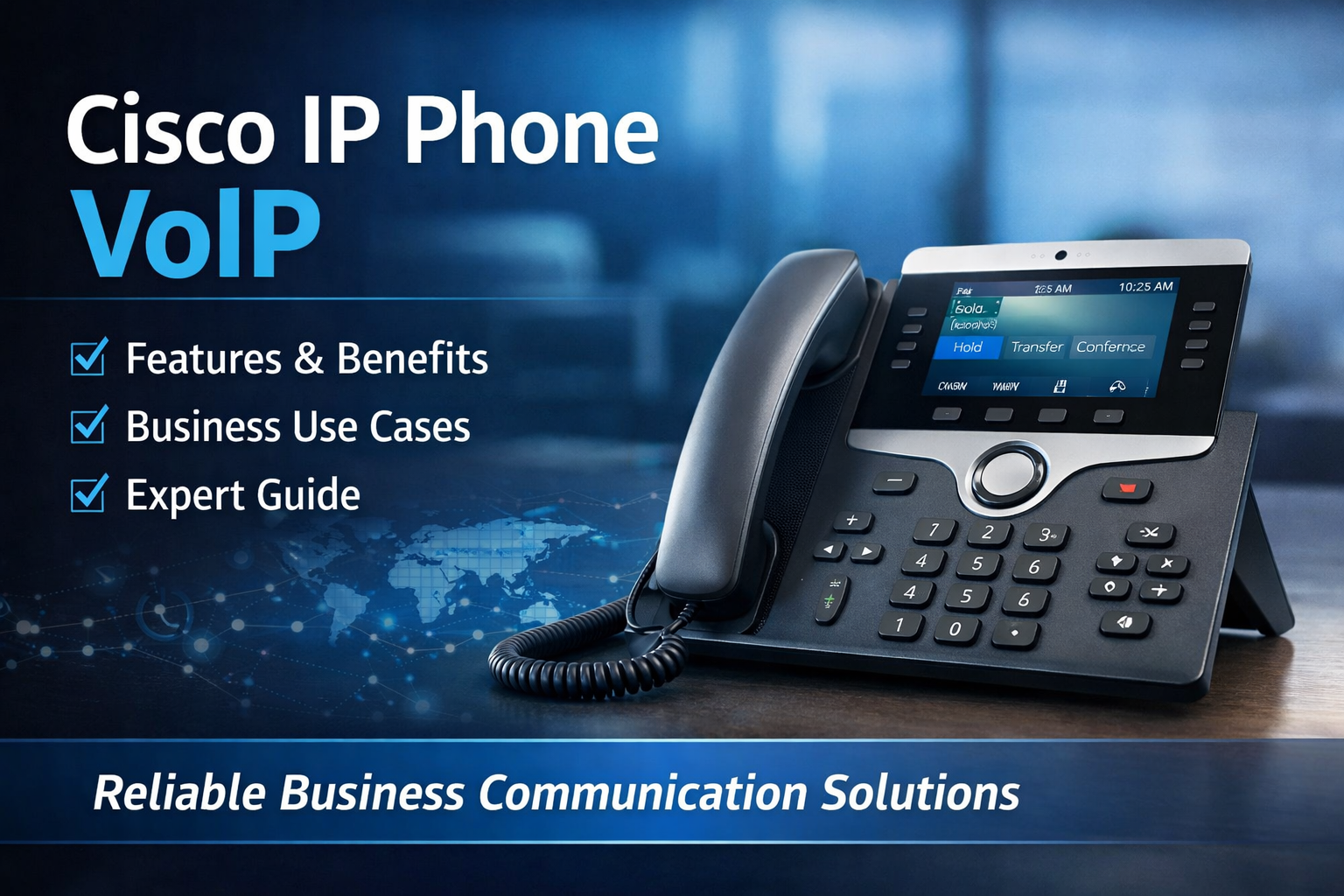
Cisco IP Phone VoIP: Complete Guide to Features, Benefits, and Business Use Cases
Cisco IP Phone VoIP solutions are widely used by businesses looking for reliable, secure, and high-quality voice communication over the internet. Unlike traditional landline phones, Cisco IP phones use Voice over Internet Protocol (VoIP) technology to transmit voice calls via IP networks, making them cost-effective, scalable, and feature-rich.
This guide explains what Cisco IP Phone VoIP is, how it works, key features, benefits, and why it is a preferred choice for enterprises, SMBs, and remote teams.
What Is a Cisco IP Phone VoIP?
A Cisco IP Phone is a hardware-based VoIP device developed by Cisco that connects directly to an IP network (LAN or internet) instead of a traditional PSTN line. These phones convert voice into digital packets and transmit them over the network using SIP or Cisco’s proprietary call control protocols.
Cisco IP phones are commonly deployed with:
-
Cisco Unified Communications Manager (CUCM)
-
Cisco Webex Calling
-
SIP-based VoIP systems
How Cisco IP Phone VoIP Works
-
Voice Capture – The phone captures your voice through a microphone
-
Digitization – Voice is converted into digital packets
-
IP Transmission – Packets are sent over the network using VoIP protocols
-
Reassembly – The receiving device converts packets back into audio
This process enables high-quality voice calls with minimal latency when configured correctly.
Key Features of Cisco IP Phone VoIP
1. HD Voice Quality
Cisco IP phones support wideband audio codecs, delivering crystal-clear call quality even in busy office environments.
2. Advanced Call Management
-
Call forwarding
-
Call transfer & hold
-
Voicemail integration
-
Conference calling
3. Security & Encryption
Cisco VoIP phones offer enterprise-grade security, including:
-
Secure SIP (TLS)
-
Encrypted media streams (SRTP)
-
Device authentication
4. Power over Ethernet (PoE)
Most Cisco IP phones support PoE, reducing cable clutter and simplifying installation.
5. Integration with Business Tools
Cisco IP Phone VoIP integrates seamlessly with:
-
CRM systems
-
Collaboration platforms
-
Cisco Webex and Unified Communications solutions
Benefits of Using Cisco IP Phone VoIP
Cost Savings
VoIP significantly reduces call costs, especially for international and long-distance communication.
Scalability
Adding new users or locations is easy—no need for additional phone lines.
Reliability
Cisco phones are known for their durability, firmware stability, and long lifecycle support.
Ideal for Remote & Hybrid Work
Employees can use Cisco IP phones with VPN or cloud calling, ensuring business continuity from anywhere.
Cisco IP Phone VoIP for Business Use Cases
-
Small Businesses – Affordable, professional-grade communication
-
Enterprises – Centralized call control and high security
-
Call Centers – High call volumes with advanced analytics
-
Hotels & Healthcare – Reliable internal and external communication
Cisco IP Phone VoIP vs Traditional Phones
| Feature | Cisco IP Phone VoIP | Traditional Phone |
|---|---|---|
| Call Medium | Internet (IP) | PSTN |
| Scalability | High | Limited |
| Features | Advanced | Basic |
| Cost | Lower long-term | Higher |
| Remote Use | Yes | No |
Popular Cisco IP Phone VoIP Series
-
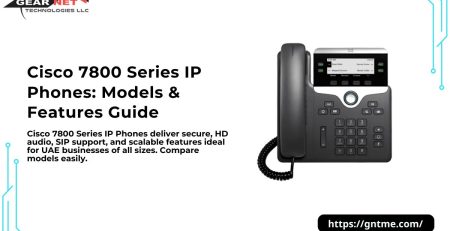
Cisco 7800 Series – Cost-effective for SMBs
-
Cisco 8800 Series – Enterprise-grade with video support
-
Cisco Conference Phones – Optimized for meeting rooms
Is Cisco IP Phone VoIP Worth It?
If your business values security, call quality, scalability, and long-term reliability, Cisco IP Phone VoIP is a strong investment. It is especially suitable for organizations already using Cisco networking infrastructure.
Final Thoughts
Cisco IP Phone VoIP solutions combine robust hardware, advanced VoIP features, and enterprise-level security. Whether you are upgrading from analog phones or deploying a new VoIP system, Cisco IP phones provide a future-ready communication platform for businesses of all sizes.