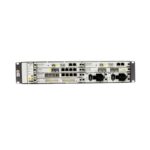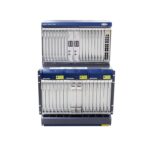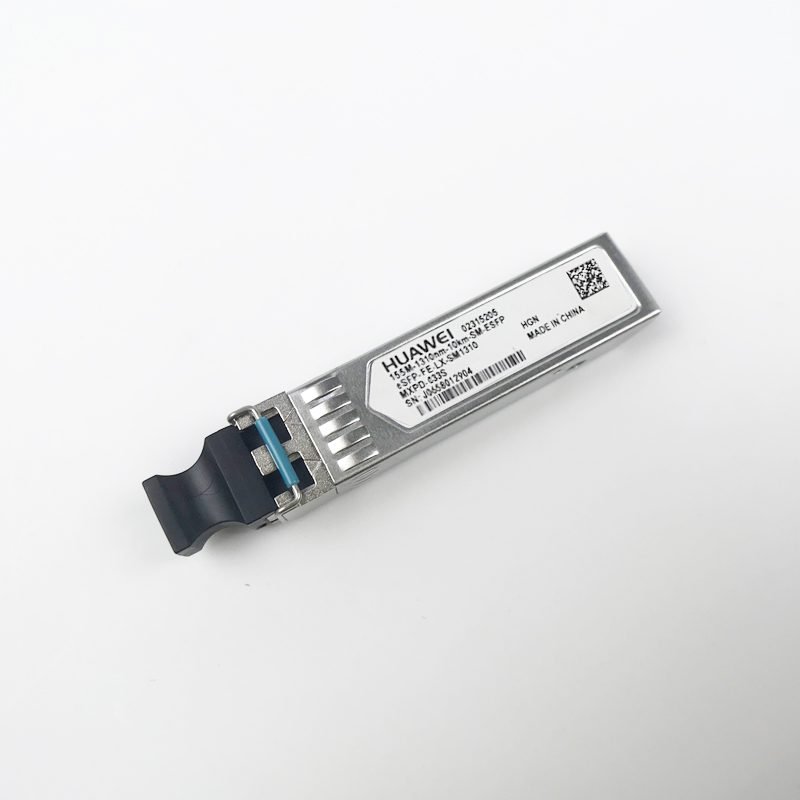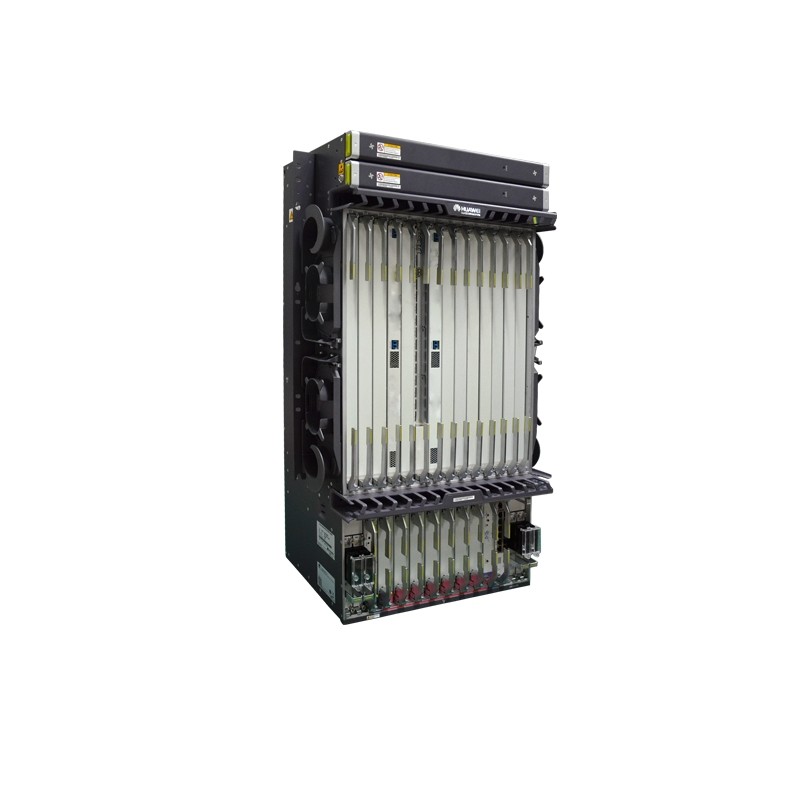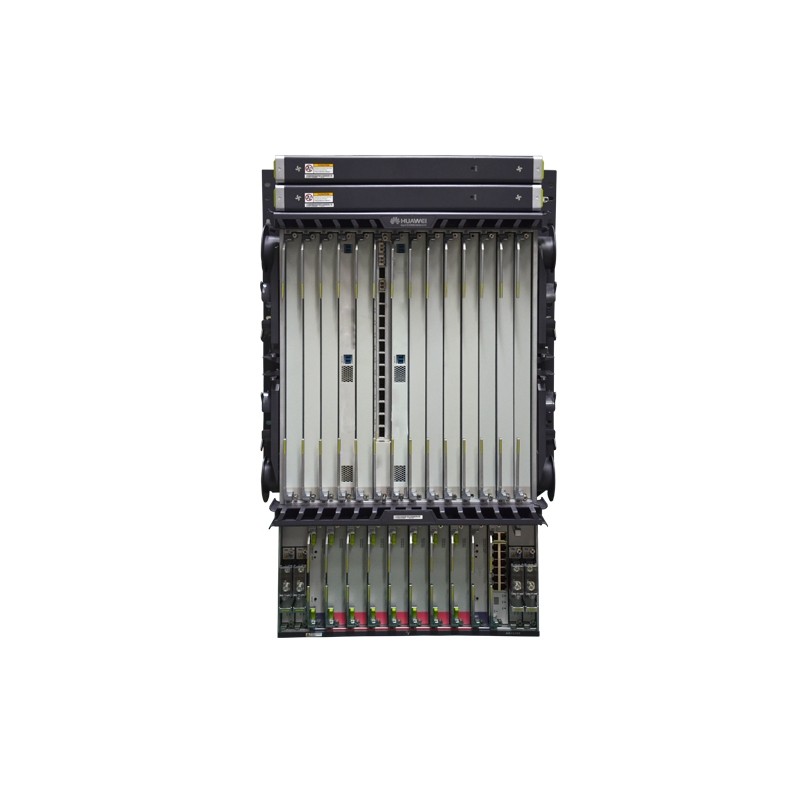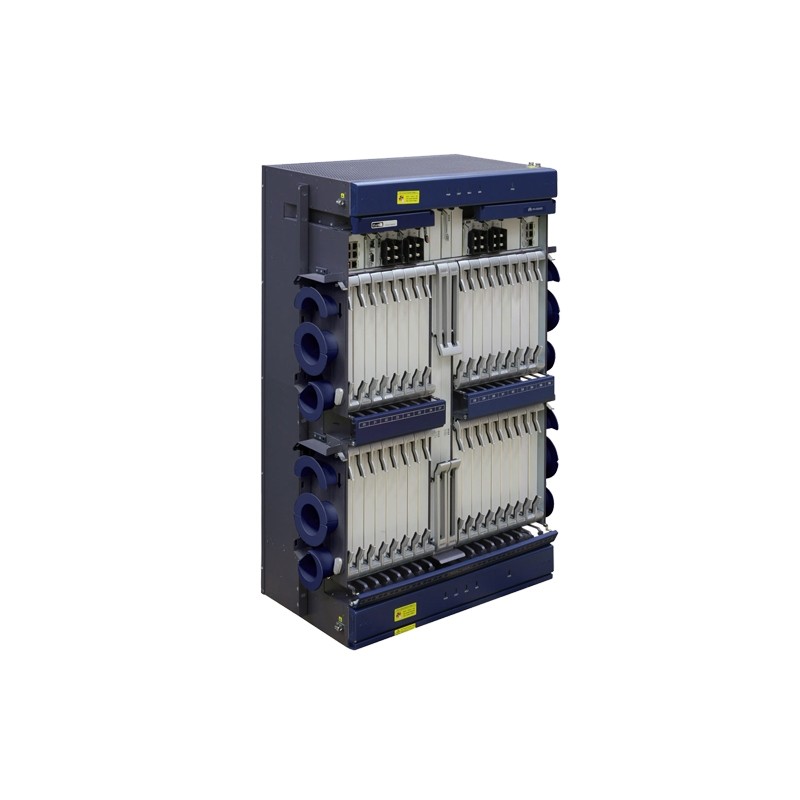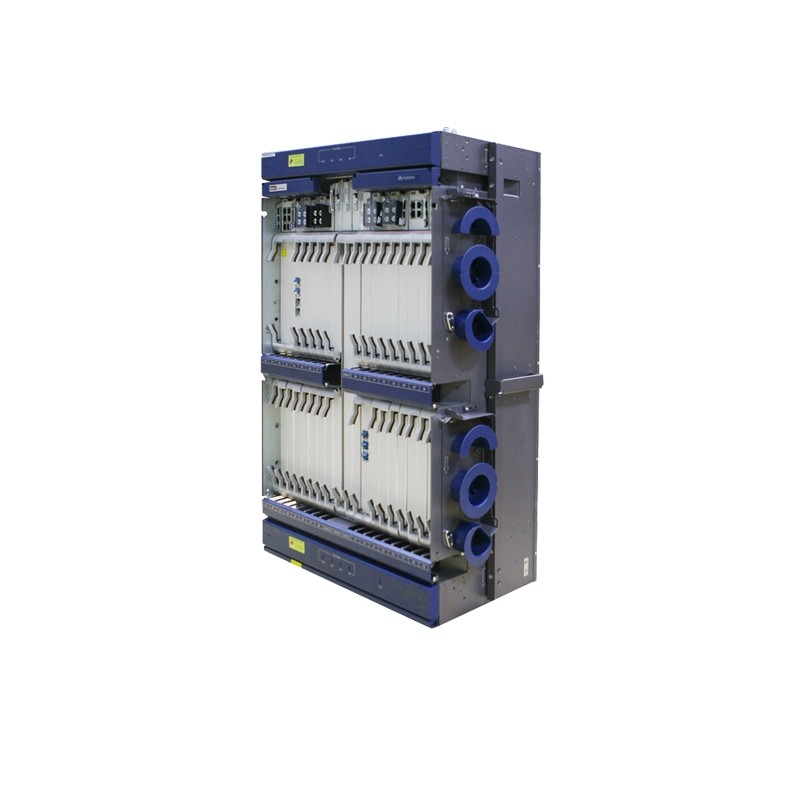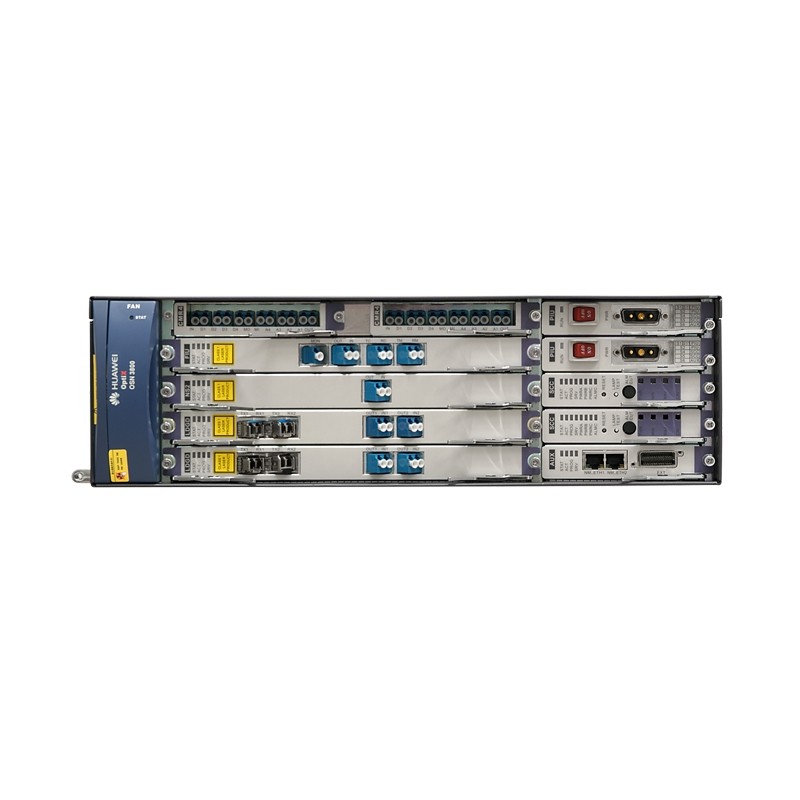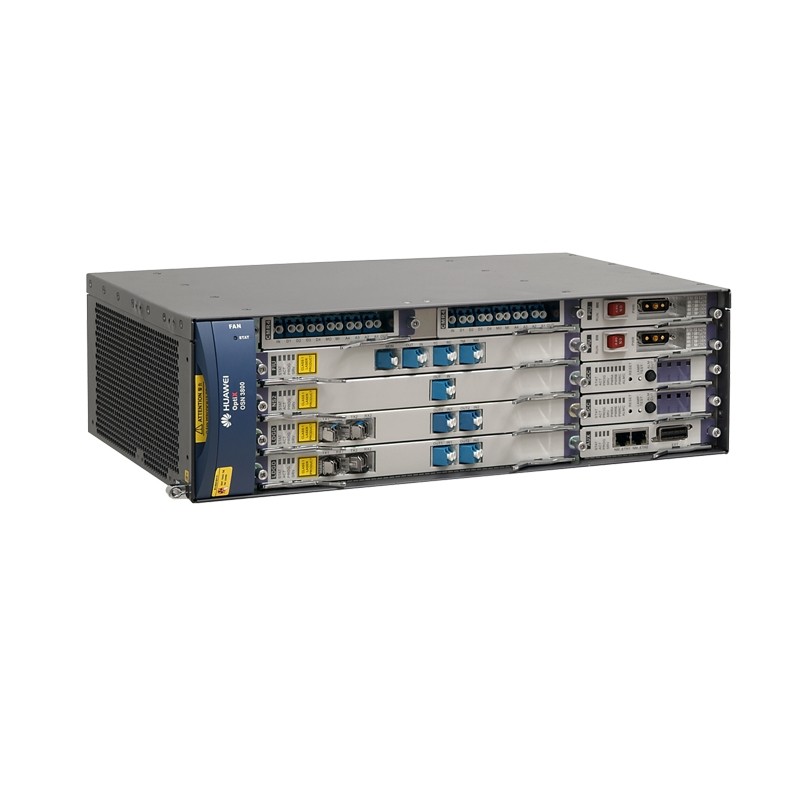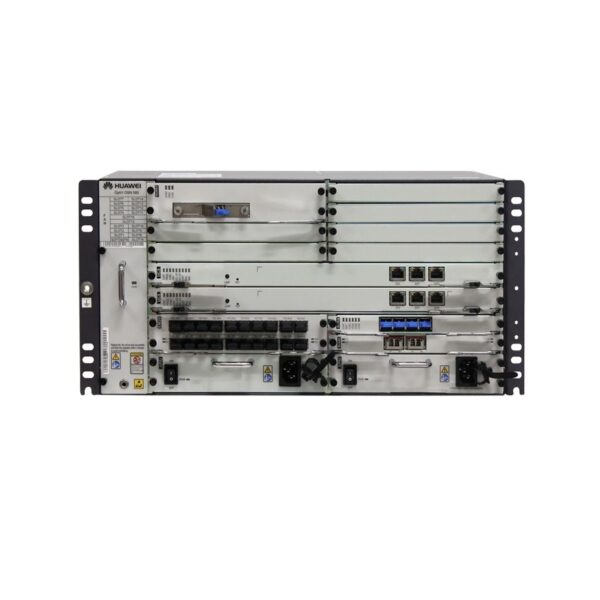
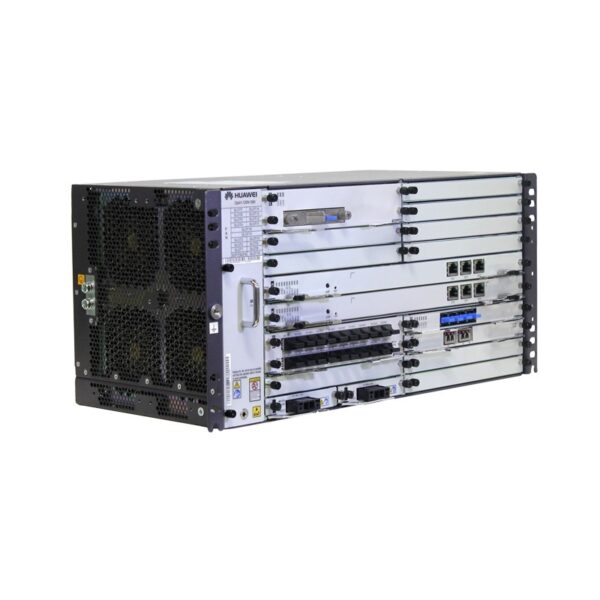
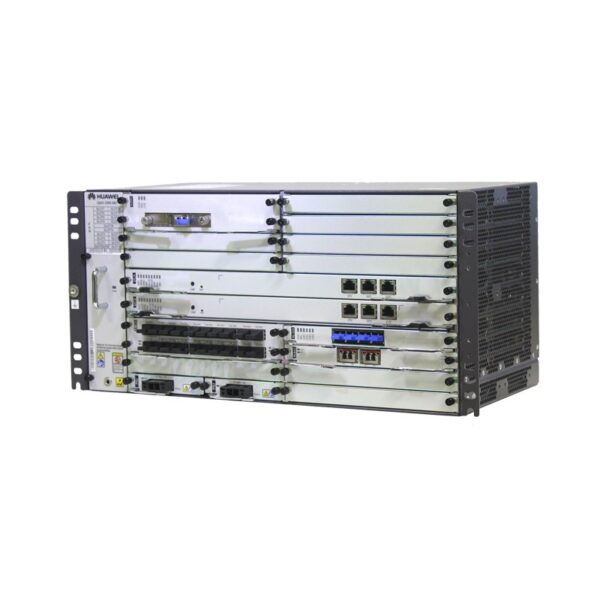
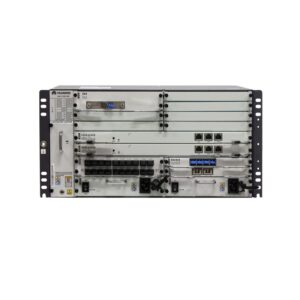
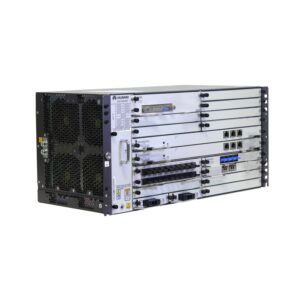
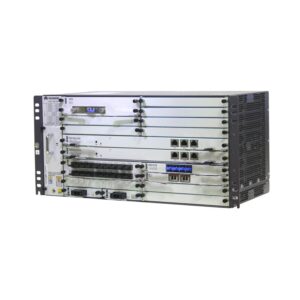
| Model: | Huawei OptiX OSN 580 – Huawei OptiX OSN 580 |
| Detail: | Huawei OptiX OSN 580, supports various service networking topologies in the time division multiplexing (TDM) and packet domains, applicable to a wide range of scenarios |
Huawei OptiX OSN 580 Specification | ||
| Dimensions | 221 mm (H) x 442 mm (W) x 224 mm (D) | |
| Installation method | In a cabinet (including ETSI, 19-inch and 23-inch cabinets), in an outdoor cabinet | |
| Switch capacity | Packet: 560 Gbit/s, TDM: 280 Gbit/s (higher order) Packet: 280 Gbit/s, TDM: 280 Gbit/s (higher order) | |
| Service slots | 15 slots | |
| Supported interfaces | OTN interface | OTU-2, OTU-3 |
| Ethernet interface | FE/GE/10GE/40GE | |
| SDH interface | STM-1/4/16/64 | |
| PDH interface | E1/E3; T1/T3 | |
| PCM interface | FXS/FXO, 2/4 wire audio and E&M X.21/V.35/V.11/V.24/V.28, RS232/RS422, RS449/RS423A/RS422A, RS530/RS530A, RS485, G.703 64 kbit/s bidirectional; IEEE C37.94 | |
| WDM interface | 40 DWDM wavelengths, compliant with ITU-T G.694.1 8 CWDM wavelengths, compliant with ITU-T G.694.2 | |
| Networking Mode | Supports pure packet, hybrid (packet + SDH), or SDH networking Supports WDM networking | |
| Power Supply | -48 V DC/-60 V DC 220 V AC/110 V AC | |
| Operation Environment | Temperature
| Long term: -5ºC ~ 50ºC Short term: -10ºC ~ 55ºC |
| Relative Humidity | Long term: 5% ~ 85% Short term: 5% ~ 95% | |
| Ethernet and MPLS-TP features | E-Line, E-LAN, and QinQ MPLS-TP based VPWS and VPLS MS-PW ETH PWE3 IGMP Snooping v2 | |
| PCM features
| Supports 64K cross connect Voice or data conference, Point-to-Point, Point-to-Multipoint, Multipoint-to-Multipoint FXO/FXS mode can be set by software E&M signaling can be set by software (types I, II, III, IV, V and British Telecom SSDC5) | |
| QoS
| Hierarchical QoS scheduling and traffic shaping DiffServ mode based on traffic classification Simple traffic classification, complex traffic classification, per-hop behavior (PHB), and ACL Committed access rate (CAR) PQ scheduling priority, weighted round robin (WRR), and PQ+WRR queuing Tail drop and weighted random early detection (WRED) Shaping based on port scheduling priority | |
| OAM
| MPLS-TP OAM
| CC, LB, LT AIS, RDI LM, DM LCK, TST CSF
|
| Ethernet OAM | ETH-CC, ETH-loopback, ETH-link trace, remote loopback, remote fault detection, RMON (RFC 2819) | |
| Protection | Equipment-level protection | 1+1 backup for cross-connect, system control, clock processing board, and power unit |
| MPLS-TP-based service protection | LSP/PW linear protection, ring protection Anti-multiple failure protection based on MS-PW LAG, MC-LAG, Dual-homing protection, LPT, ERPS | |
| SDH-/PDH-based service protection | Linear MSP and MSP ring SNCP E1 1+1 SNCP E1/T1 1+1 tributary protection switch (TPS) | |
| Synchronization | Supports G.813, Synchronous Ethernet, and IEEE 1588v2 synchronization Adaptive clock recovery (ACR) Two external clock inputs/outputs (2 MHz or 2 Mbit/s) Two external time signals inputs/outputs (1pps+TOD) | |